The guided tour has changed. And according to Collette’s Christian Leibl-Cote, so has the traveller taking it.
In Episode 11 of You Came to the Right Place, TravelPulse Canada Managing Editor Natasha Lair and Senior Editor Jen Mallia sit down with Christian Leibl-Cote, Executive Vice President of Global Business at Collette, for a conversation about the evolution of guided travel, changing Canadian booking patterns, emerging destinations, small groups, solo travel, technology and what it all means for travel advisors.
At the heart of the conversation is a traveller who increasingly wants more than a checklist of famous sights.
“The traveler’s very different from what it was prior to COVID,” Leibl-Cote says. “They’re looking for more experiences, unique things that they can talk about for the rest of their lives.”
Canadians Are Going Farther — And Spending More
Leibl-Cote says Collette is seeing noticeable shifts in the way Canadians travel, including longer trips and growing demand for destinations outside the traditional European favourites.
Safaris in Kenya, Tanzania and South Africa are performing particularly well, while Japan and Southeast Asia continue to gain ground. Canadians are also increasingly upgrading their flights to premium economy and business class.
“Travel has really become a necessity for our Canadian travelers because they missed out for two years,” he says.
 Christian Leibl-Cote (Photo Credit: Christian Leibl-Cote)
Italy, Iceland and Ireland aren’t disappearing from wish lists, but Leibl-Cote says travellers are increasingly looking toward places they haven’t experienced before, including Eastern Europe.
And the old “bucket list” mentality is evolving along with them.
Travellers may still want to see the Eiffel Tower, he says, but simply seeing it is no longer enough. They want to explore neighbourhoods, eat where locals eat and come home with stories about experiences they couldn’t easily recreate on their own.
Not Your Grandma’s Bus Tour
If escorted touring still conjures up images of early mornings, endless kilometres on a motorcoach and racing from attraction to attraction, Leibl-Cote would like to change that perception.
Collette has worked to slow down its itineraries, reduce one-night stays and give travellers more time in destinations. Its Exploration small-group tours average 19 guests, with a maximum of 24 and lower limits on some itineraries.
That shift also offers an answer to another challenge facing the industry: overtourism.
Smaller groups can venture into less-visited towns and regions, while travellers who still want marquee destinations such as Rome and Paris are increasingly considering shoulder and off-season departures.
The result is a version of touring that Leibl-Cote says is less about the motorcoach and more about access, experiences and taking away the logistics.
A Growing Opportunity in Solo Travel
There’s another audience advisors shouldn’t overlook: solo travellers.
A little more than 20% of Collette’s travellers are travelling solo, Leibl-Cote says.
For someone who wants to see the world but doesn’t necessarily want to navigate it completely alone, a guided vacation can provide a built-in community along with the security of knowing someone else is handling the details.
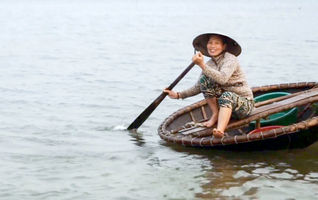 Collette released its 2026-2027 Asia brochure (Photo Credit: Supplied)
It’s also one reason Leibl-Cote believes advisors need to experience modern guided touring themselves.
Collette is currently offering Canadian advisors who complete the final module of Collette University an opportunity to travel on select tours for $150 per night, with a companion rate of $200 per day.
The idea is simple: it’s easier to sell an experience when you understand it.
AI Can Help. Relationships Still Win.
No travel industry conversation in 2026 gets very far without AI, but Leibl-Cote is clear about where he believes technology belongs.
“AI’s never gonna replace a human touch,” he says. “At the end of the day, people wanna be able to talk to humans.”
Collette is investing in technology and looking at how AI can improve service for advisors, while consulting advisor boards about what tools would actually make doing business easier.
But Leibl-Cote believes the bigger opportunity for advisors lies in something decidedly low-tech: relationships.
“It’s all about service. It’s all about really relationships. It’s what the next generation of travelers are looking for,” he says.
He points to younger travellers increasingly turning to advisors because they don’t necessarily want to spend hours researching and piecing together complex trips themselves.
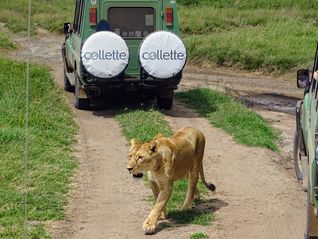 Collette says its guided safari itineraries are designed to simplify logistics. (Photo Credit: Collette)
For advisors hoping to grow their guided-tour business, his advice is similarly straightforward: work with your BDM, invest in education and understand what today’s touring experience actually looks like.
Travel as the “Greatest Educator”
The conversation also gets personal as Leibl-Cote talks about travelling with his children and why he believes seeing the world can change how people understand cultures different from their own.
“I wish everybody would travel because it really helps you understand this whole world,” he says.
And then there’s the Pulse Check.
This time, rapid-fire questions take the conversation from a beloved restaurant in Germany’s Black Forest to airline apps, Christmas markets and a family safari memory involving Leibl-Cote, his son Dylan and a hippo outside their tent in the Serengeti.
Because sometimes the experiences you never put on the bucket list become the ones you talk about forever.
Episode 11 of You Came to the Right Place is available now wherever you get your podcasts.
Subscribe now using your favorite service:


Subscribe and follow along for candid conversations with the people shaping Canada’s travel industry.
Topics From This Article to Explore


