
by Natasha Lair
Last updated: 7:55 AM ET, Wed April 22, 2026
G Adventures is expanding a program that ties environmental restoration directly to local livelihoods.
Timed with Earth Day, the company announced it has added seven new community partners to its Trees for Days initiative over the past 18 months, bringing the total to 22 communities worldwide and benefiting more than 200,000 people.
The program is also nearing a milestone, with six million trees expected to be under active stewardship by next month. Unlike short-term planting campaigns, each tree is grown with a commitment to maturity, with the first planted in 2023 now beginning to reach that stage.
“But for G Adventures, the real story is not the number of trees. It’s what those trees make possible.”
Moving beyond traditional tree-planting models
The initiative comes at a time when some large-scale tree-planting efforts are facing scrutiny for failing to deliver long-term environmental or social benefits.
Trees for Days is structured differently, emphasizing partnerships with local communities rather than standalone environmental targets. Instead of focusing solely on carbon offsetting, the program aims to address interconnected issues such as food insecurity, unemployment and biodiversity loss.
RELATED: G Adventures Wraps Cross-Canada Roadshow, Raises $10.5K for Planeterra
“By putting local people at the centre; supporting women, uplifting Indigenous communities and creating economic opportunities, tree growing becomes a catalyst for broader change.”
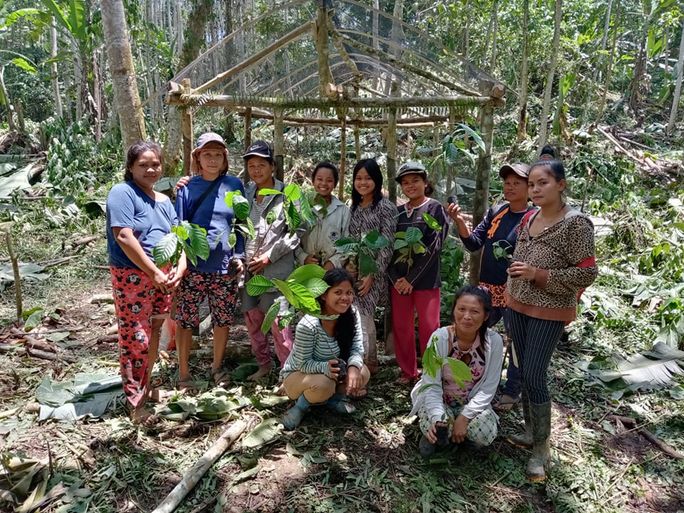
Tribes and Nature Defenders (Photo Credit: G Adventures)
Philippines: Restoring forests and cultural survival
In the Philippines, the Higa-onon Indigenous community is working to restore a degraded rainforest described as their “last refuge.” Decades of environmental decline had forced some residents into illegal logging and mining to survive.
Through the Tribes and Nature Defenders project, supported by Trees for Days, more than 200 farmers, along with youth and women participants, are restoring the land using nurseries that grow native and coffee trees.
For community elders, the effort represents a fight for “cultural nature survival,” highlighting the link between environmental protection and cultural preservation.
Kenya: Tackling drought while supporting women
In Kenya’s Embu region, where farmers have faced persistent drought since 2024, the program is supporting agroforestry initiatives aimed at improving food security and household resilience.
More than 50,000 seedlings have been distributed to over 500 farmers in the past 10 months, bringing the total to more than 300,000 trees since 2023. A significant portion of these seedlings comes from women-owned nurseries, creating an additional income stream.
RELATED: G Adventures' Reforestation Program Uplifts Over 100 Communities Ahead of Earth Day
Income from seedling sales is pooled to provide loans within the community. The release highlights examples including a 64-year-old woman who used a loan to purchase hens for egg production, and another who bought a goat to improve family nutrition.
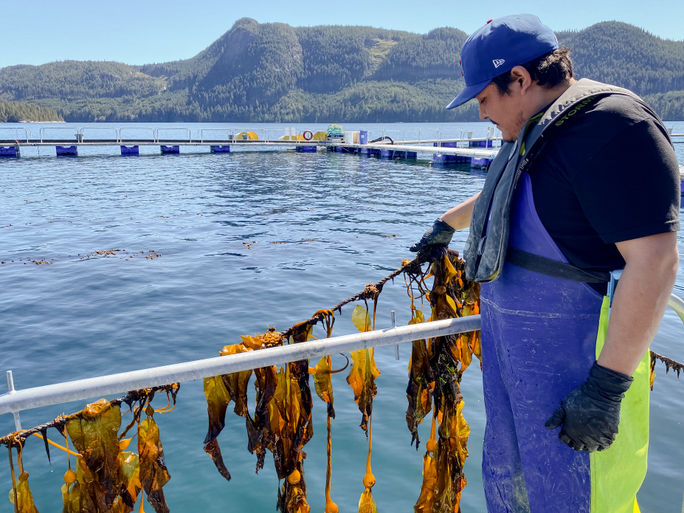
Coastal Kelp (Photo Credit: G Adventures)
Canada: ‘Seaforestation’ on the B.C. coast
In Canada, the initiative is taking a different form, focusing on restoring underwater kelp forests along British Columbia’s Sunshine Coast.
Working with Coastal Kelp and Indigenous partners including the Tsawwassen First Nation, Nuchatlaht Tribe and Lax Kw'alaams Band, the project uses a “seaforestation” approach. By installing non-invasive moorings to create a “false bottom,” the initiative enables kelp growth in areas where it was previously not possible.
The result has been a rapid ecological recovery, with kelp returning alongside marine species such as scallops, oysters, shrimp and rockfish.
A portion of the output is reinvested locally, with 10% of processed kelp distributed as food products and another 10% of fertilizer donated to community gardens.
Scaling without losing local focus
As the program expands, the company says maintaining its community-led approach will be key.
“While planting trees is relatively easy, growing them, and ensuring they deliver real, lasting benefits, is far more complex.”
The takeaway, according to G Adventures, is that climate initiatives tied to tourism can play a role beyond mitigation.
“For G Adventures, the lesson is simple: when tree growing is done right, it doesn’t just help tackle the climate and biodiversity crisis. It helps communities adapt to it, recover from it and build stronger futures because of it.”
Topics From This Article to Explore


