
by Jen Mallia
Last updated: 10:35 AM ET, Tue November 11, 2025
Touring the former submarine base in the port of Saint-Nazaire is a sobering reminder of World War II and its effect on the small ship-building town.
Saint-Nazaire, on the Atlantic Coast of France, has a long ship-building history. It’s built a naval legacy since the mid-19th century, when the first shipyard was constructed in the harbour.
Ships are still being built at the Chantiers de l’Atlantique (open to the public for a visit as long as you follow strict photography and recording prohibitions).
Presently in the yard, the luxury Orient Express Corinthian – the world’s largest sailing yacht – is floated out, and the MSC World Asia is nearing completion and getting ready to set sail.
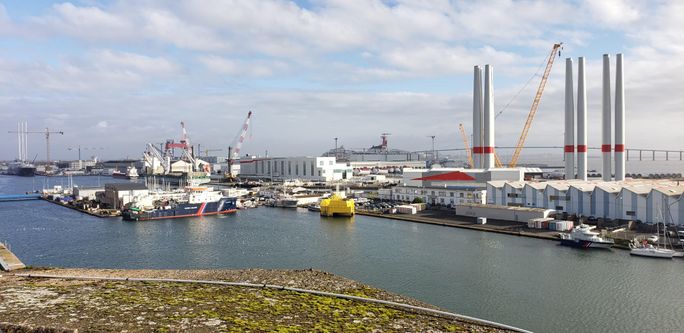
Chantiers de l’Atlantique (Atlantic Shipyard) Saint-Nazaire, France (Photo Credit: Jen Mallia/TravelPulse Canada)
It’s a proud history. However, the shipbuilding expertise of the town and its strategic coastal location drew the attention of the invading German armed forces during the Second World War.
On a recent river cruise on the ms Loire Princesse with CroisiEurope, TravelPulse Canada had the opportunity to visit Saint-Nazaire to learn about its fascinating naval history and how it survived through German occupation during World War II.
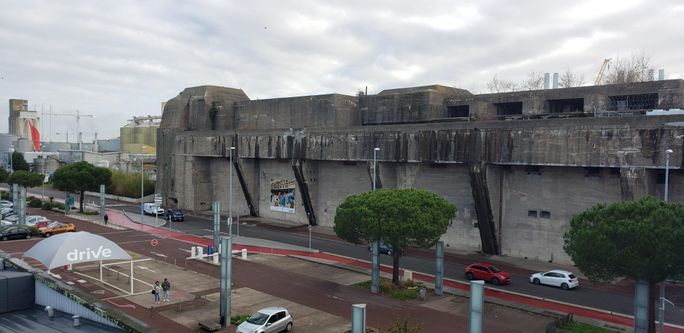
The exterior of the Saint- Nazaire submarine base (Photo Credit: Jen Mallia/TravelPulse Canada)
Along the harbour from where the modern shipyard stands sits a stark reminder of a brutal time in Saint-Nazaire’s history. The Saint-Nazaire Base sous-marine was one of five bases in France constructed by the Germans under the Nazi government to build their infamous U-boat submarines.
Today, tourists can visit independently or book a French language guided tour of the facility. It was an optional excursion on our Loire Princesse itinerary, so as part of a group we were able to secure an English-speaking guide. On other itineraries, travellers could visit on their own for a self-guided tour during free time in the port. The exhibitions don't take a long time to see; a visit of half an hour would probably be sufficient for most visitors.
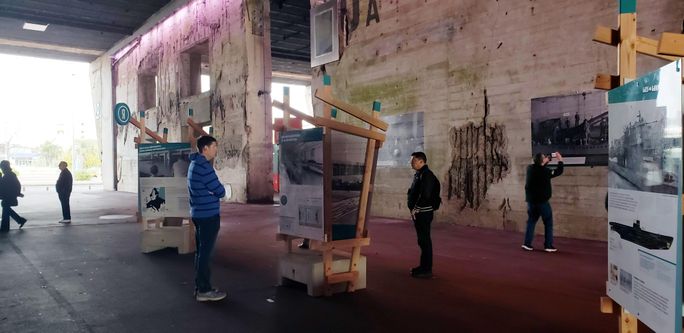
Exhibits at the Saint-Nazaire submarine base (Photo Credit: Jen Mallia/TravelPulse Canada)
For clients interested in World War II history, it is a can’t miss, even without a guide. As a person who would not call themselves a war history buff, I still found it fascinating and a tangible way to connect with the past. The site had historical photo displays and exhibits to read (mainly in French, but Google Translate does an adequate job). It is not a museum with a bunch of interactive activities, but as a monument to wartime industry, it is sobering.
The U-boats built here were a powerful resource for the Axis powers; Allied forces concentrated on destroying these bases in an effort to curtail their production. The squat fortified building was designed to withstand Allied bombs, using half a million cubic metres of concrete. The roof — which is open to visit and has a panoramic viewing platform — gives a view of the engineering techniques used, with channels and rounded beams to deflect and diffuse the explosive blasts of direct bombing attacks.
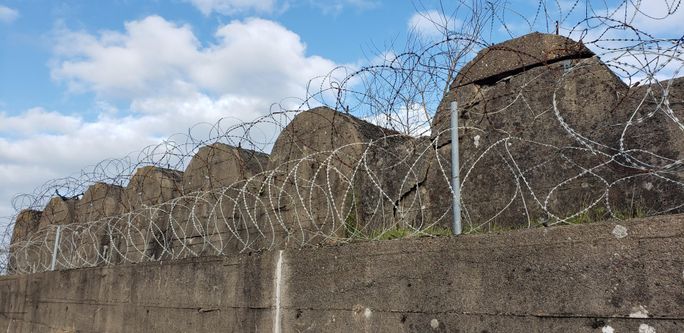
The bomb resistant roof of the Saint-Nazaire submarine base (Photo Credit: Jen Mallia/TravelPulse Canada)
We learned how some of the French and Spanish workers (Republican prisoners sent to work on the project) covertly undermined the construction process, mixing too much sand into the concrete, making it weak and crumbly, as well as setting the rebar too close to the surface of the building, making it more vulnerable to attack.
Despite the work of the anti-Nazi saboteurs, the base withstood attack. Once the Allied forces realized focusing on the nearly indestructible base itself was of little use, they concentrated on destroying the surrounding area.
In addition to the extant submarine bays, the massive complex now houses Escal’Atlantic – a museum with recreations of transatlantic ship life in different eras in different classes, the VIP concert hall and contemporary-art exhibitions in the LiFE gallery. The submarine pens are also home to the Tourist Office. A visit to the Ecal'Atlantic Oceanliner Experience is well worth the time. Dedicate at least an hour to read and look at all the displays.
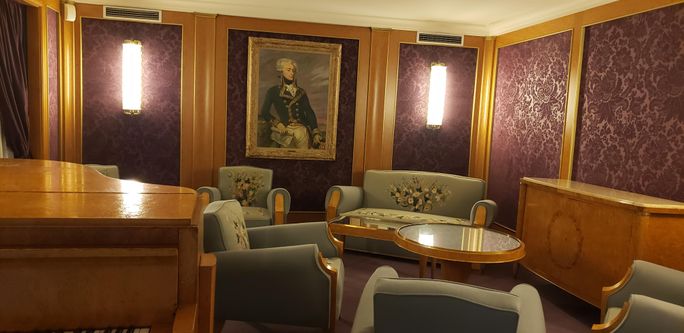
The music room of a transatlantic ship at Escal’Atlantic Oceanliner Experience in Saint-Nazaire (Photo Credit: Jen Mallia/TravelPulse Canada)
Much of the area that was destroyed during the war was not rebuilt until the 1970s. There were a lot of emotions involved for the townspeople, our guide explained. An example of how they have blended the scars of the past with the hope for the future is at Le Théâtre. The building incorporates what was left of the 19th century railroad station (which still bears the marks of the bombing), melded with a new concrete wing that was designed to mimic the industrial look of the nearby base.
The ms Loire Princess is the only river cruise ship that sails along the Loire River, with Saint-Nazaire as a regular port of call on its itinerary. According to Cruisemapper, the Crystal Serenity will dock there in August, 2026 and the Crystal Symphony will visit in September, 2027.
Topics From This Article to Explore


