
by Natasha Lair
Last updated: 8:45 AM ET, Thu February 19, 2026
Destinations International (DI), in collaboration with the Indigenous Tourism Association of Canada (ITAC) and the American Indigenous Tourism Association (AIT), has released a new resource to strengthen partnerships between destination organizations and Indigenous communities.
The Indigenous-Led Tourism Partnership Toolkit was unveiled this week during the 2026 International Indigenous Tourism Conference in Edmonton, Alberta.
Produced with support from the Destinations International Foundation, the toolkit is designed to guide destination organizations in building respectful, mutually beneficial relationships with Indigenous communities and advancing tourism systems owned and governed by Indigenous Peoples.
Indigenous-led tourism is rooted in relationships to land, strengthening cultural continuity, employment and long-term community vitality.
RELATED: Indigenous Tourism to Gather in Edmonton for 2026 International Conference
“Indigenous tourism must always be Indigenous-led and grounded in our communities’ values, governance and vision for the future,” said Keith Henry, president & CEO of the Indigenous Tourism Association of Canada (ITAC).
“This toolkit is an important step in helping destination organizations understand how to engage with Indigenous communities respectfully and effectively, while supporting economic reconciliation, cultural revitalization and long-term partnership built on trust.”
The economic impact is significant.
In Canada, Indigenous tourism generated $1.3 billion in GDP in 2023, supporting nearly 54,700 jobs. By 2034, Indigenous tourism is projected to contribute $67 billion USD globally.
RELATED: Authentic Indigenous Tourism Growing in Demand: ITAC
“Indigenous-led tourism is not simply a market opportunity; it is a pathway to community vitality, cultural revitalization and self-determination,” said Don Welsh, president & CEO of Destinations International.
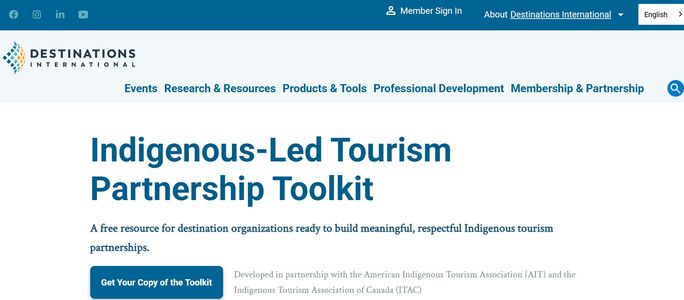
Indigenous-Led Tourism Partnership Toolkit
“This toolkit provides destination organizations with a practical framework to approach partnerships with humility, respect and long-term commitment, ensuring Indigenous voices are not symbolic participants but leaders at the table.”
What the Toolkit Covers
The toolkit outlines practical guidance for destination organizations, including:
- Building respectful and culturally aware relationships grounded in research, humility and listening
- Recognizing Indigenous Peoples as rights-holders and honouring sovereignty and governance structures
- Supporting Indigenous-defined tourism readiness through self-determined planning and capacity building
- Formalizing partnerships through tools such as Memoranda of Understanding (MOUs)
- Embedding Indigenous engagement across marketing, procurement, governance and visitor services
- Developing visitor education strategies that promote responsible and culturally aware travel
The kit also highlights accreditation models such as “The Original Original Accreditation Program,” created by Indigenous tourism operators and initiated by ITAC to signal authentic Indigenous ownership and operational excellence.
RELATED: Indigenous Cuisine at YVR Garners National Attention
According to DI, the toolkit addresses a gap identified through its research: many destination organizations lack formal relationships with Indigenous communities and are seeking guidance to establish partnerships rooted in trust and authenticity. It provides frameworks, readiness assessments and operational tools intended to help destinations move from intention to sustained action.
The full Indigenous-Led Tourism Partnership Toolkit is available online.
Topics From This Article to Explore


