
by Debbie Olsen
Last updated: 8:15 AM ET, Tue February 18, 2025
Being the best at what you do means constantly learning and adapting. For travel advisors, that means actively seeking knowledge and insights from other agents, especially those who have been in the field longer, along with accelerating professional development by implementing proven successful approaches. But what affects travel advisor sales? Which agents have the highest income, and how do they do it? Why do clients choose to book with them?
From July 11 to Aug. 16, 2024, Travel Weekly and Phocuswright (sister brands of TravelPulse Canada), along with sponsors Ensemble and Princess Cruises, conducted an exclusive online survey of 444 Canadian travel advisors and travel agency owners. A similar study was conducted in the U.S. (with 1,571 responses), and both studies offer a deep dive into the differences and similarities between the two markets.
Part one, Exclusive Research Part 1: Profile of the Canadian Travel Advisor, focused on advisors, who they are, what they do and how the most successful ones operate. In this article — part two of a three-part series — we are looking at the Canadian survey and what it says about advisors and sales.
If you are interested in increasing your travel sales, here are key takeaways from the 2024 Canadian Travel Advisor Study.
Travel Advisor Income Insights
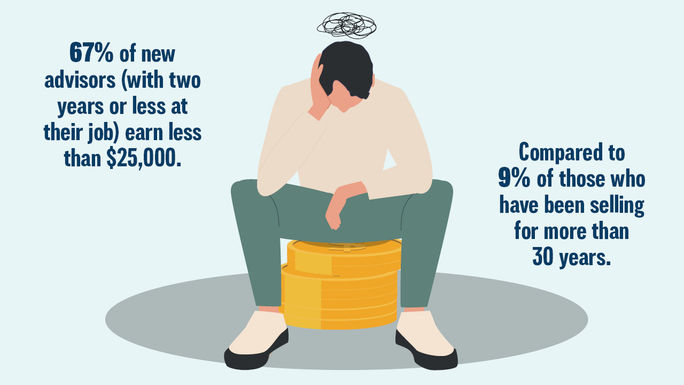
The Canadian survey found that advisor income from travel sales typically increases as an agent gains experience. Roughly two-thirds (67%) of new advisors (with two years or less at their job) earn less than $25,000, compared to 9% of those who have been selling for more than 30 years.
(Photo Credit: Deborah Dimond)
Personal income from travel sales is strongly correlated to hours worked per week; on average, travel advisors who make $25,000 per year or less work about 24 hours per week. Those who earn $100,000 or more annually work an average of 44 hours per week.
Client Insights
Most travel advisor clients are older than the average traveler, with a higher household income: Seventy-six percent of clients are over the age of 40, and 52% have a household income of $100,000 or more.
(Photo Credit: Deborah Dimond)
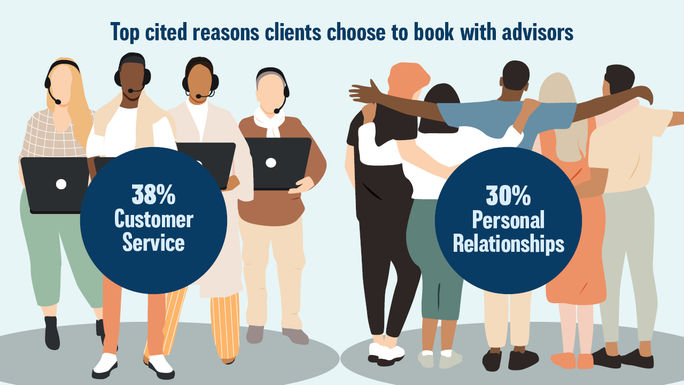
Only a small share of agents believes their clients are motivated by price (3%) or a unique product offering (2%). Instead, advisors cite customer service (38%) and personal relationships (30%) as the top reasons clients choose to book with them.
Travel Agency Gross Sales
More than one-third (35%) of agencies earned less than $500,000 in 2023, while 32% earned more than $3 million. On average, home-based independent agencies have lower gross bookings compared to traditional agencies — roughly half of independent agencies transacted $300,000 or less in 2023, compared to 16% of traditional agencies;
56% of traditional agencies had gross bookings over $1 million. It should also be noted that the report found it’s more common for travel advisors who work as independent contractors (ICs) in a home-based agency to work part-time, which also affects gross sales.
Revenue Sources
Agency revenue sources are similar for traditional and home-based agencies — most profits come from commission. The report found that, on average, more than two-thirds (68%) of agency revenue came from commissions/overrides. Eleven percent of agencies receive incentives/overrides from airlines that otherwise do not pay commissions.
(Photo Credit: Deborah Dimond)
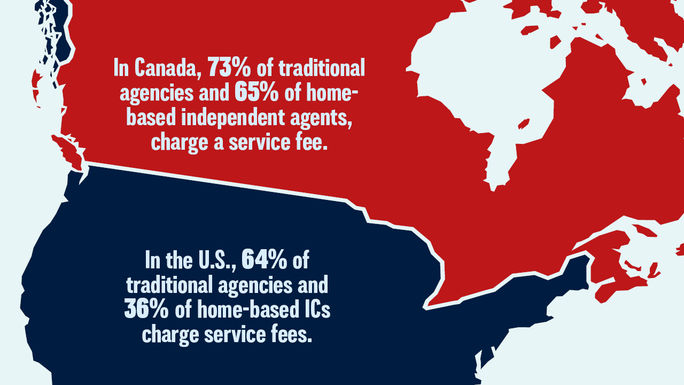
Service fees are another source of income for most agencies. Nearly seven in 10 (69%) agencies charge clients a service fee, although these fees are more prevalent among traditional agencies (73%) than home-based independent ones (65%). Nearly half (49%) of agencies say they introduced service fees in the year prior to the survey. Interestingly, travel advisors in the U.S. are less likely to charge service fees; 64% of traditional agencies say they charge fees, and 36% of home-based ICs charge service fees. In the U.S., 75% of agency revenue in 2023 came from commission/overrides.
Products and Profits
Leisure travel represented a larger share of revenue in 2023 for home-based independent agencies (90%) compared to traditional agencies (81%). In 2023, 91% of agency gross bookings came from international travel, compared to 9% from domestic travel. The share of domestic travel was slightly higher for traditional agencies (12%) compared to independent agencies (7%).
(Photo Credit: Deborah Dimond)
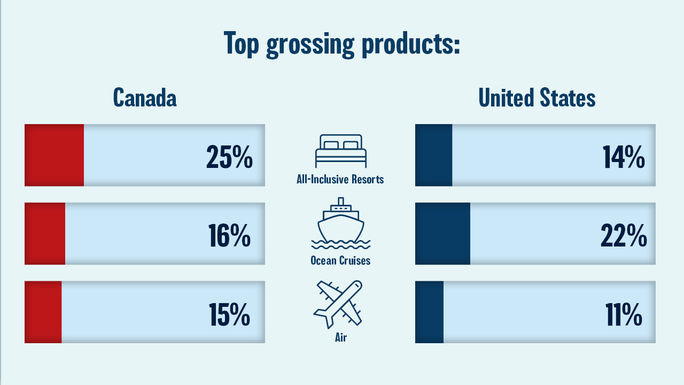
All-inclusive resorts generate the highest share of gross bookings for Canada agencies (25%), followed by ocean cruises (16%) and air (15%) for both traditional and home-based agencies. In the U.S., 79% of agency income comes from international travel, and 21% comes from domestic travel. Top grossing products in the U.S. included ocean cruises (22%), all-inclusive resorts (14%) and air (11%).
Next: The Future of Travel
Watch for our next article, part three in our series of deep dives on the 2024 Canadian Travel Advisor Study, where we’ll focus on the future of the travel industry. (Here’s a hint: The future is bright! Nearly two-thirds of agencies reported growth in year-over-year bookings.)
Topics From This Article to Explore


