
by Bert Archer
Last updated: 3:30 PM ET, Fri June 19, 2026
In what’s becoming one of the world’s great hotel cities, the new Aman Nai Lert in the centre of Bangkok is in a class by itself. If the Middle East hadn’t made the very concept of six-star seem ridiculous, I would say this is a six-star property. But given that emirati confections have already laid claim to that sixth (and seventh) star, let’s call it a 5+.
Designed by Jean Michel Gathy, the Belgian-born Malaysian-based designer and architect behind the Chedi Andermatt and the already iconic Marina Bay Sands in Singapore, as well as the Four Seasons Bangkok and a dozen others, it’s the profusion of details that makes this Aman the sort of place that might just entice you to stay indoors in the middle of one of the world’s most exciting cities.
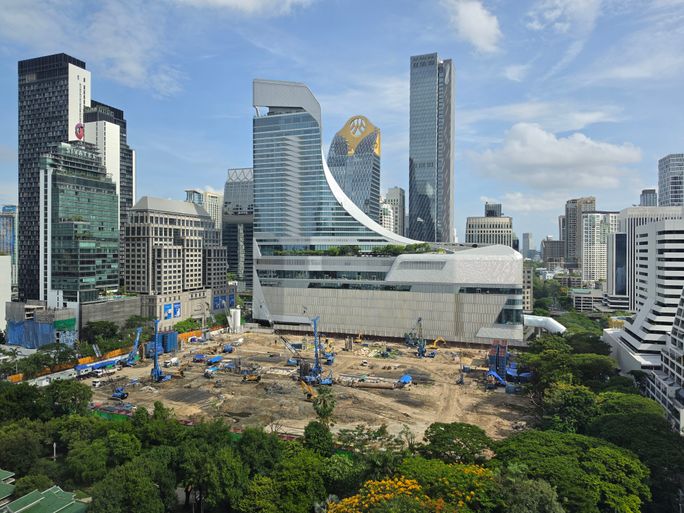
(Photo Credit: Bert Archer)
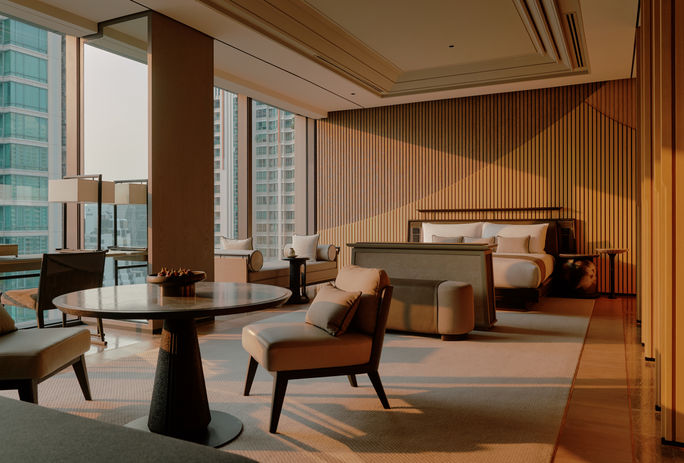
Each room, for instance, has a three-level ceiling, which conceals the gentle overhead lighting, but also refers to the three-roofed century-old house on the grounds, former home of Nai Lert, the founder of the family that still owns the property, and built this hotel. As that house sprang leaks, instead of just fixing it, Nai Lert (which translates as Mr Lert) would have another roof built on top, ultimately ending up with three (it also happens to be an architectural reference to the three-roof style of the Lanna people from the north around Chiang Mai and Chiang Rai).
Everything from the standalone circular tubs to the coffee cups and spoons and the two styles of robes in each room - both among the best I’ve seen in any hotel room - are attention-worthy. But it’s the pool that’s the show-stopper. Built around the top of what one staffer told me is the third tallest tree in Bangkok, swimming under the treetop, branches hanging down almost to the water’s surface, while the ninth-floor views surround you, is serenely spectacular.
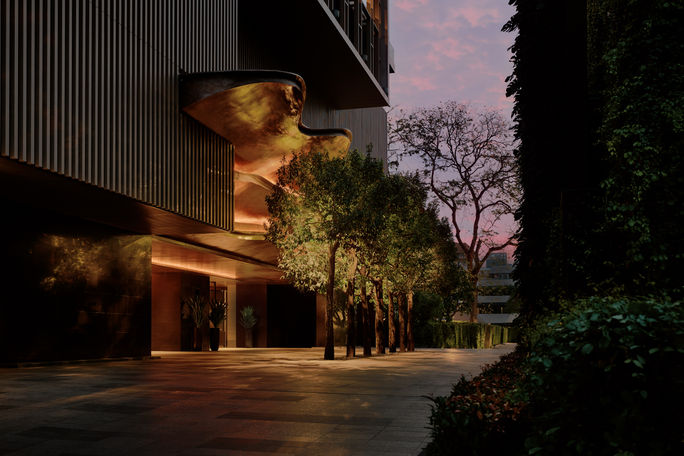
All of this marvelous design is hidden away in a fairly standard looking tower, part of which is given over to Aman residences, where a couple of Lert’s descendants live I’m told. And the whole thing is secreted behind from what I could tell is an unsigned turn-off from a system of alleyways off the main road, near the CentralWorld mall in a sort of iykyk situation.
The service is attentive to the point of obsequiousness, with front desk staff coming out from behind their counter to press elevator buttons for guests. Though in what’s becoming a recognizable global five-star standard (see, most recently, The Muir), the extremely careful service seems training manual-based rather than instinctual or cultural. For instance, after spending the middle hours of the night working on Eastern Standard Time, I woke up at 10:35 am, and messaged the house Whatsapp number I’d been given for service at 10:41, asking if I could still get breakfast, which was included. They said breakfast service had ended at 10:30, and so no, I couldn’t, butt I was free to order off the room service menu if I liked (at full price, of course). Izzy Sharpe would not be amused.
I’ve spoken to people in the industry in and around Bangkok and can confidently say that the Aman is generally considered the city’s most beautiful hotel. I stayed, as a guest of the Aman, in the second lowest class of room. It was 90m2, had a bathroom area bigger than the size of entire rooms I’ve stayed in at other 5-star hotels, and though the foreground view was largely of a construction site (they’re building a mall next door apparently), the whole skyline was also laid out in the background.
(Photo Credit: Aman)
The room also came with a large, thick, solid chocolate leaf under a bell jar, the significance of which was explained to me but which I quickly forgot. It was probably 500 grams, and it was delicious.
The Aman has what is describes as seven dining options. The hotel decided to host me in the Italian restaurant, Arva, where the house Champagne was sweet and the food perfectly fine. There is also a teppanyaki restaurant, an omakase restaurant, and the 1872 lounge which features “bites” both Western and Thai. For a hotel in the capital of one of the world’s great culinary cultures, it may seem odd that they don’t have a Thai restaurant. Like Vietnamese and Singaporean food however, often the best examples of it are from street vendors or small front-stoop establishments, so maybe they decided not to compete with all the awesomeness out on the street and stick to things they could do better. In which case, I applaud their gastronomic self-awareness.
When I asked, through their PR firm, if I could either get images of their excellent robes to publish here or, since I neglected to take some myself while I was there, arrange to take some myself after that fact while I was still in Bangkok, I was told, though that PR firm, that they prefer reviews of their properties to run exclusively with images provided by them. Only provided images, but they don’t have provided images of what I needed. Breakfast is included, but only on their unbendable terms.
(Photo Credit: Aman)
The Aman brand is fantastic. The Amanfayun, in Hangzhou, where I stayed about a dozen years ago, remains one of the signal hote experiences of my life. Everything was perfect in this adaptively reused tea village. The Aman Nai Lert is not perfect. I spoke to several members of the hospitality community none of whom worked in competing hotels, and the consensus seems to be that this particular Aman has not quite hit its stride, not quite figured out how the Thai industry works, perhaps. One of them put it perfectly : They have excellent service at the Aman, but they lack hospitality.
It remains, however, an aesthetically impressive place, lavish and tasteful, and if you have someone you want to impress in Bangkok, this would be the place to take them. Just don’t order the house Champagne. Or sleep in.
Topics From This Article to Explore


