
by Bert Archer
Last updated: 1:40 PM ET, Wed November 11, 2026
A train can have wheelchair lifts, wide aisles and accessible washrooms, but if a traveller can't get from the platform to the street, none of it matters. That was the message from accessibility advocate John Sage at the Railbookers 2026 Summit in Vancouver, where he urged the travel industry to look beyond basic accessibility features and pay closer attention to the details that can make or break a trip.
“As a disabled traveller, it's not the best accessible feature of the journey that matters; it's the worst.”
John Sage is the Texan founder and CEO of Accessible Travel Solutions and on-stage at the Railbookers 2026 Summit in Vancouver, he made the case for paying more attention to accessibility in travel as simply and compellingly as I’ve ever heard it made.
Speaking with Matt Foy, Railbooker’s senior director of rail and transportation, Sage made the case that, disability being extremely individual, travel advisors need to be aware of the specifics, both of their client’s needs, and the particulars of the bookings.
It doesn’t matter if the aisles are wide, the train has a lift, or that the bathrooms are large and accommodating if the only way to get from the tracks ot the street at the stop your client’s getting out at is a long set of stairs.
RELATED: Toronto Pearson, Air Transat Help Make Flying More Accessible
Or, as was the case with the summit’s host hotel, the Fairmont Hotel Vancouver, everything was admirably accessible except the shower, where they had installed the bench, Sage said, “on the wrong wall,” making it impossible to reach the controls.
(Photo Credit: Bert Archer)
Though the exact nature of the partnership between Sage’s company and Railbookers was left unclear, presumably, it’s about making sure Railbookers sales agents are aware of these sorts of specifics when selling trips to clients or advisors.
He was very clear on one thing, though : even the most accessible form of air travel is inferior to properly handled rail.
“So air travel, travelling here. I book a normal ticket. I show up. They usually want me to stop by the counter at the the front, which I don't want because I've already checked in online. [But] they want to tag my wheelchair and inspect it. Then I've got to go through security. It's a big hassle.
"I have to get there early to be the first to pre-board. Sometimes they show up on time to to get me on first. Sometimes they don't…. They transfer me to an aisle chair, bring me to my seat. I sit in that seat until we arrive. And so they do have onboard aisle chairs to get to the bathroom, but the bathrooms are often very small. It's a huge hassle. Just flying is a huge hassle.”
Contrast this to being able to get to the train station a mere 30 minutes before departure, and being able to get a window seat.
RELATED: ACTA, Spain Partnership Puts Accessible Tourism on the Advisor Agenda
Sage left with a final word for those travel organizations that say accessible travel is just not a big segment for them, that they don’t get that many requests, so why bother investing in research and training?
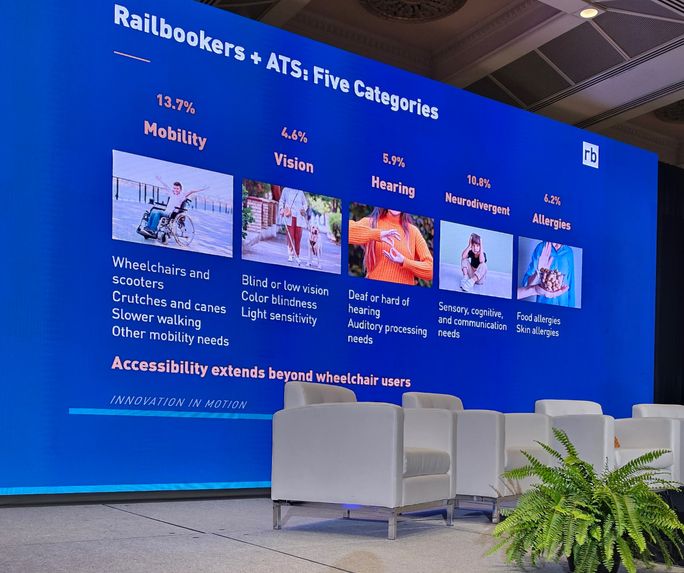
In front of a slide showing demographic figures for those mobility issues (13.7%), vision (4.6%) and hearing (5.9%) impairments, neurodivergence (10.8%) and allergies (6.2%), with the tagline “Accessibility extends beyond wheelchair users,” he pointed out the flip side of one of the most attractive aspects of working with this segment of the travelling public: their loyalty.
“They don't want to take a risk on someone that's not marketing themselves as accessible,” Sage said.
“And so we've seen that even the biggest companies in the world don't get a proportional amount of the request from people with disabilities, because the marketing is important.”
You’ve got to proactively let the market know you’re willing and capable, or many clients won’t even consider you.
Topics From This Article to Explore


