
by Bert Archer
Last updated: 12:15 PM ET, Tue November 10, 2026
If you’d asked me to tell you three things about Estonia before I went there for the first time recently, I’d have been able to tell you the capital was Tallinn, that it was where Euro rideshare company Bolt was founded, and… that would have been about it.
I know a lot more about it now. When you go to a place you know so little about, every time you turn a corner is a discovery. But the biggest one for me was the Kadriorg Palace, where they house the national gallery of foreign art.
The first thing you notice about it as you approach through the beautiful park of which it’s the focal point is that it looks pretty Russian in a St Petersburgy kind of way. There’s a reason for that. It was built by Peter the Great for his wife, Catherine, for what he hoped might be some pleasant seaside getaways. I knew Estonia had been a part of the USSR, but not that it had been part of Russia before that. And Peter the Great was a while ago. Turns out he started building it in 1718, less than a decade after he took it from the Swedes in the Great Northern War (a war I had never heard of) in 1710. I made a mental note to look into the nation’s Swedish history, and continued up into the palace.
The art was lovely, mostly unfamiliar, and featured way more female representation than I’m used to seeing from a collection that covers mostly the 18th and 19th centuries.
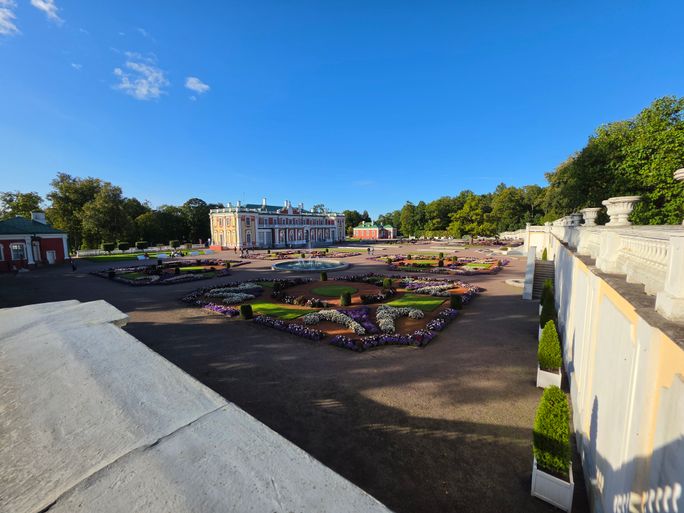
Kadriorg gardens (Photo Credit: Bert Archer)
The gardens outside are beautiful, Baroque, and unlike anything else I saw in Tallinn, whose old town is extremely pre-Baroque. It’s definitely worth a lengthy stroll.
There were some grandly imperial rooms in the palace, as you’d expect from someone known as the Great, but maybe my favourite thing was in an upper room that was furnished completely differently from the rest of the place, early to mid-20th century style, with a piece of furniture that was part sofa and part desk that caught my eye. I didn’t see any explanation of it, but my phone told me it came from the era of Konstantin Päts, who led Estonia on and off from 1921 to 1940, when Estonia became Soviet. In the 1930s, Päts made the palace the residence of the head of state, added to it, and redid some of the rooms, like the one I saw, in contemporary Estonian style.
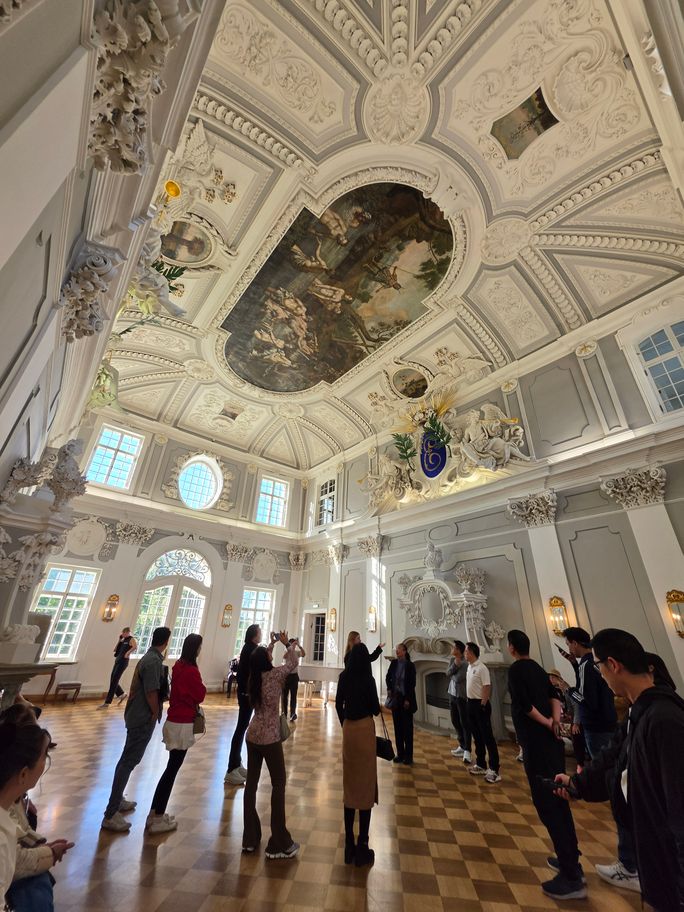
Kadriorg's ballroom (Photo Credit: Bert Archer)
It turns out the foreign art fits the spirit of the place. Peter the Great meant this project, as he did St Petersburg back home, to be a sign to the world that Russia was turning towards Europe and embracing it, becoming part of the greater European world. It seems Estonia kept this Euro-facing attitude (the 1930s furnishings drew partly on Baltic German traditions, not Russian ones), while Russia wavered, then did an about-face in the Soviet and Putin eras.
If travel is at least in part about horizons and knowledge, understanding and discovery, then places like this, with little phone-assisted insights like these, represent the very heart of travel.
There’s a lot more to discover about Estonia. Tallinn’s got one of the best-preserved old towns in Europe, 113 hectares of UNESCO-recognized real estate organized on a 13th-century street plan. But I barely got to see any of that this time. It’ll have to wait for my next visit.
Are there good hotels in Tallinn, Estonia?
Yes, there are luxury ones, but also well priced local, independent hotels that are clean and well located.
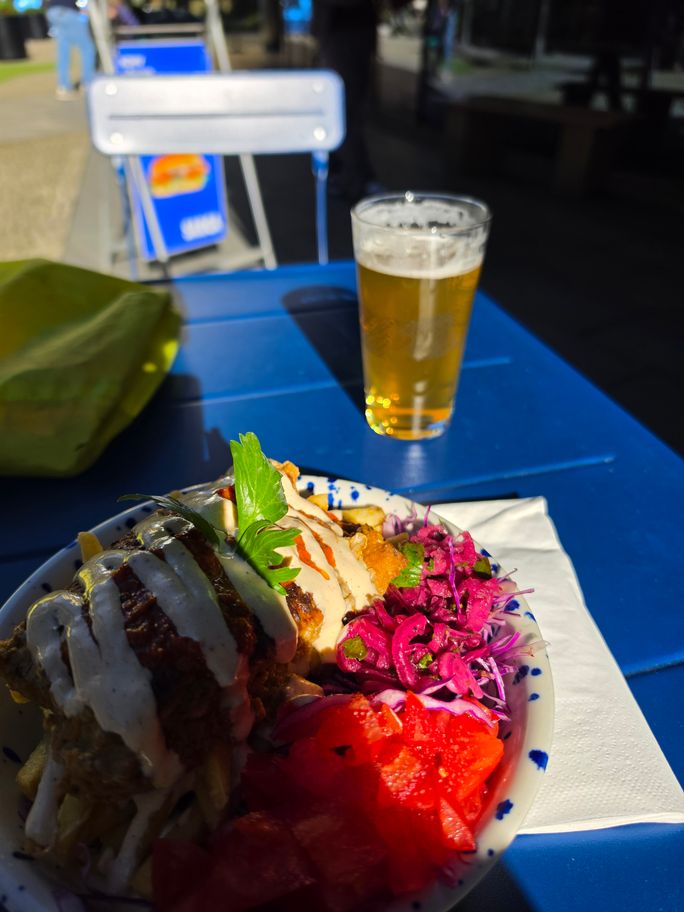
The food's good and hearty, this lunch is from Sanga Sandwich Bar (Photo Credit: Bert Archer)
What’s the food like in Tallinn?
The cuisine is slightly more Nordic than the rest of the Baltic region, but it remains centred on rye bread, potatoes, pork, with stews and beer as staples.
Is Estonia expensive?
It’s not like parts of Eastern Europe still are, but it’s not Norway, either. Outside the summer peak, you can get decent hotels for less than 100 euros a night, and meals for 20 euros are not uncommon, though they can get pricier as you go higher-end.
Topics From This Article to Explore


