Previous stories about TravelPulse Canada’s trip to Jordan with the Jordan Tourism Board North America (JTBNA) focused on my emotional reactions to a place where hospitality is ingrained in the culture and a warm welcome guaranteed. I simply fell in love with the place and its open-hearted people.
Sharing borders with Iraq, Syria, Saudi Arabia, Israel and the Palestinian territories of the West Bank, the Hashemite Kingdom of Jordan is full of surprises. The first -- and most important for prospective travellers at this time -- is that it feels safer than many destinations Canadians travel to without concern. In fact, it often felt safer than the streets of my Canadian home. If I didn’t know that a war was raging in Gaza, 150 km away from Amman, I would have been none the wiser during the 10-day trip.
People travel for diverse reasons. Some love culture, art and history. Others yearn to taste their way through a destination’s cuisine. Some are pilgrims, aiming to add depth to their faith. Some travel to be pampered in luxury accommodations and spas. Still others love eco-travel, visiting community-supporting tourism enterprises, hiking trails (like the 675-kilometre Jordan Trail) or engaging in extreme physical activities.
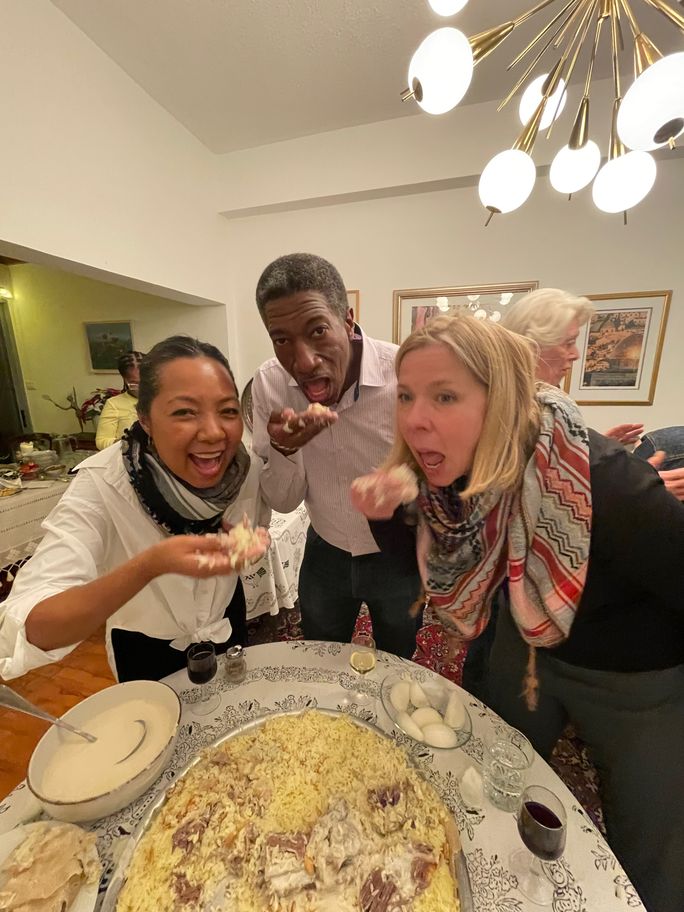
The handy way to eat mansaf, Jordan's national dish. (Photo Credit: Bruce Parkinson)
Jordan has something for all of these interests and more. Over 10 days and nine nights, the superbly planned itinerary touched on many of them.
On arrival we checked in for four nights at the St. Regis Amman, an elegant five-star property with spacious, luxurious rooms, butler service, a lovely rooftop bar, and a breakfast spread that could send you back to bed if you aren’t careful. The fresh-squeezed juices – orange, strawberry, pomegranate among them – were a luxury unto themselves.
After dropping our bags, we were whisked off to Sufra for our first introduction to Jordanian cuisine. It was the ideal location, a place born out of the idea that Jordan’s unique culture is better understood by a journey through its kitchens.
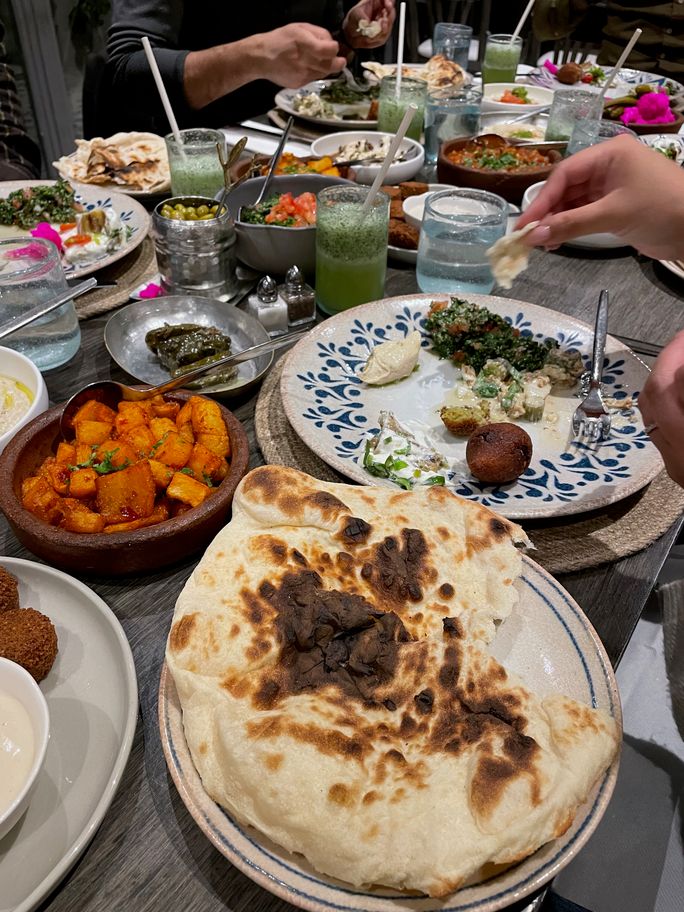
Dinner of hot and cold mezze at Amman's Sufra. (Photo Credit: Bruce Parkinson)
Restaurant staff swarmed our table, creating a smorgasbord of shareable hot and cold mezze. All of the flavours and ingredients we would get to know and love over the next days were there, many of them scooped up with hot pita bread fresh from a wood-fired tabun – similar to an Indian tandoor.
After a flight recovery sleep in St. Regis comfort, my Jordan Journey began in earnest. Looking back, the number of experiences we had over the next nine days is mind-boggling. Recounting them all is asking a lot of 21st-century attention spans, so here are some of the highlights.
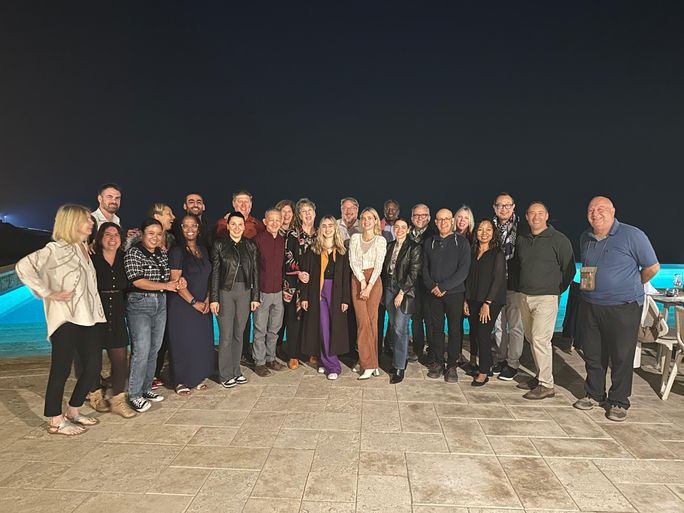
Group shot of the Jordan Tourism Board North America 'Jordan Up-Close and Personal' trip. (Photo Credit: Bruce Parkinson)
“Friends of Jordan:” My Fellow Travellers
This wasn’t a typical media group. Titled ‘Friends of Jordan,’ our large posse of 20 included just three journalists. The rest of the list included members of the Jordan Tourism Board North America team led by managing director Malia Asfour -- including two from Canada – Deirdre Campbell and Jovily Martone from TartanBond, the company that represents Jordan tourism here. There were a number of participants who have already made a positive impact on Jordanian tourism, including Tourism Cares CEO Greg Takehara and Shannon Stowell, CEO of the Adventure Travel Trade Association.
Our engaging guide was Majdi Kohof, and Amman-based Jordan Tourism Board employee Ahmad Hayari ably handled logistics. In three decades of writing about travel, this was the best group I’ve ever been with. At one point I mentioned to someone that I was amazed that none of the group members were even slightly annoying. Then I thought: “Maybe it’s me!”
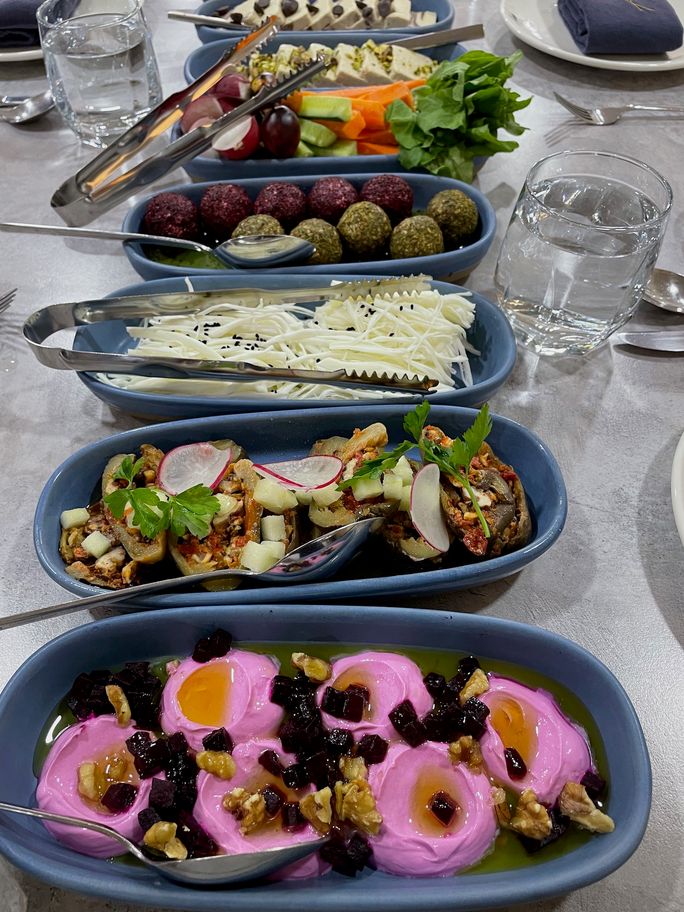
Jordanian specialties at Amman's Sufra. (Photo Credit: Bruce Parkinson)
A Feast Of Fresh Flavours
Jordanian cuisine is unique, with influences from around the Middle East and Mediterranean – notably Bedouin, Turkish and Lebanese. Frequently used spices include cumin, coriander, paprika, cardamom and turmeric. Lamb, chicken and beef are the primary meats, but our meals tended to be heavy on veggie dishes, salads, fruits, cheeses and yogurts – along with staples like the creamiest hummus you’ve ever tasted, and bottomless servings of pita bread.
We enjoyed two home-cooked meals – one of Druze specialties at Amer’s Kitchen For Traditional Food in Al Azraq – and another at the home of Eisa Dweekat, who leads hiking groups and offers homestays in Ajloun.
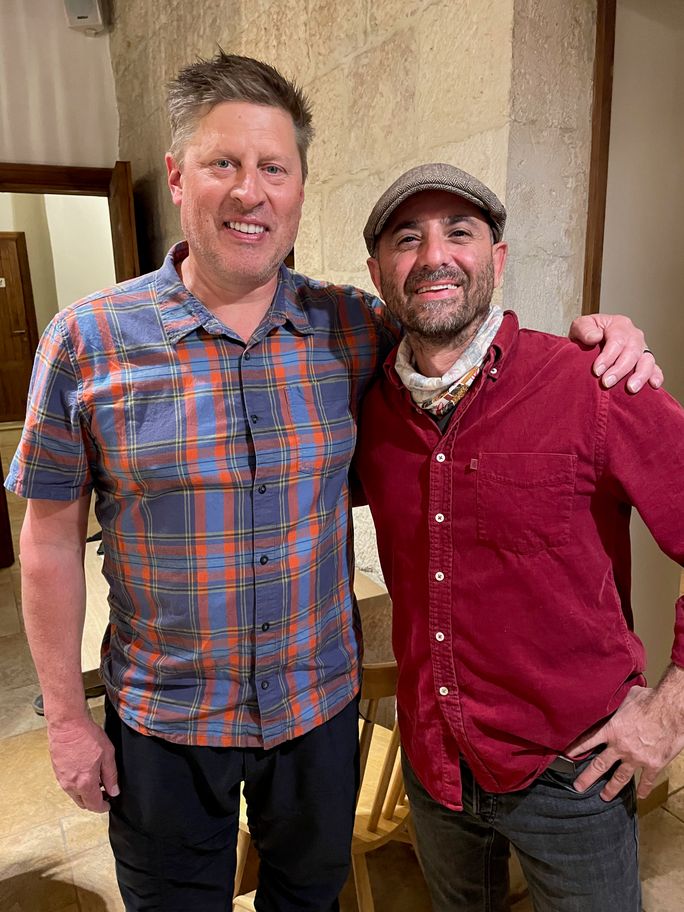
Shannon Stowell, CEO of the Adventure Travel Trade Association, with Rakan Mehyar, a passionate practioner of natural farming in Jordan. (Photo Credit: Bruce Parkinson)
Our group agreed that the highlight meal of the trip was served at Carob House, an inspiring farm-to-table restaurant and cultural space in the ‘Mosaic City’ of Madaba. Founder Rakan Mehyar also operates Carob Farms, which supply the fresh ingredients for the restaurant and gift shop. An adventure travel pioneer in Jordan, Mehyar has turned his skills to natural farming and regenerative agriculture. We were served a meal for the ages.
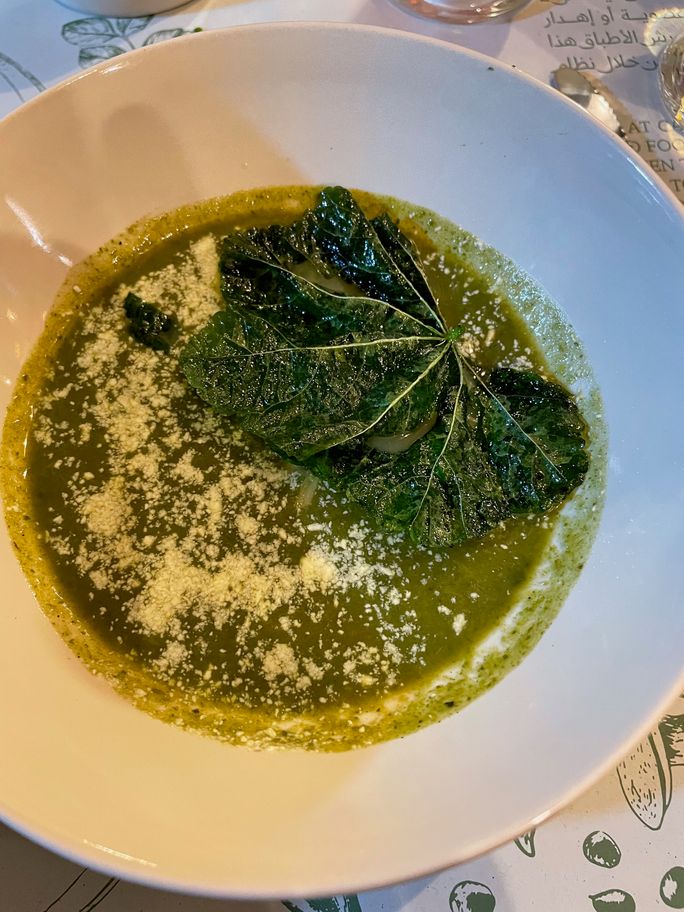
Delicious mallow soup at Carob House in Jordan's Madaba. (Photo Credit: Bruce Parkinson)
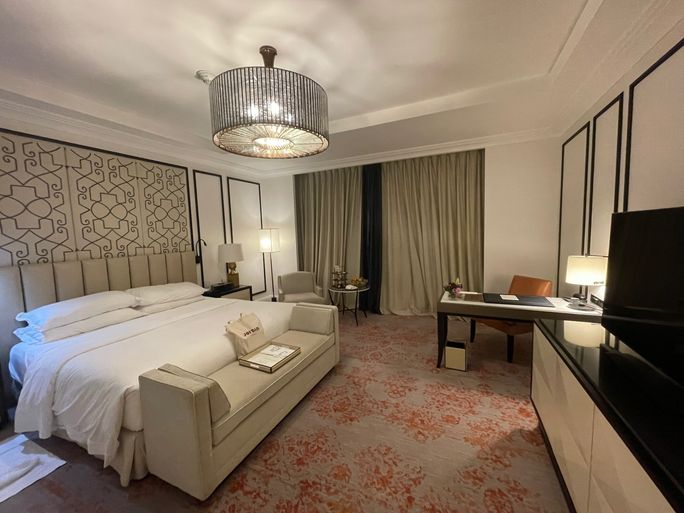
A spacious room at the elegant St. Regis Amman. (Photo Credit: Bruce Parkinson)
Soft Landings At Night
Jordan has excellent hotels, especially in Amman, the Dead Sea and Petra. Amman, the metropolis of 5.5 million residents -- half the country’s population – is home to upscale brands like the previously mentioned St. Regis, as well as Fairmont, Four Seasons, Ritz-Carlton, Movenpick and more.
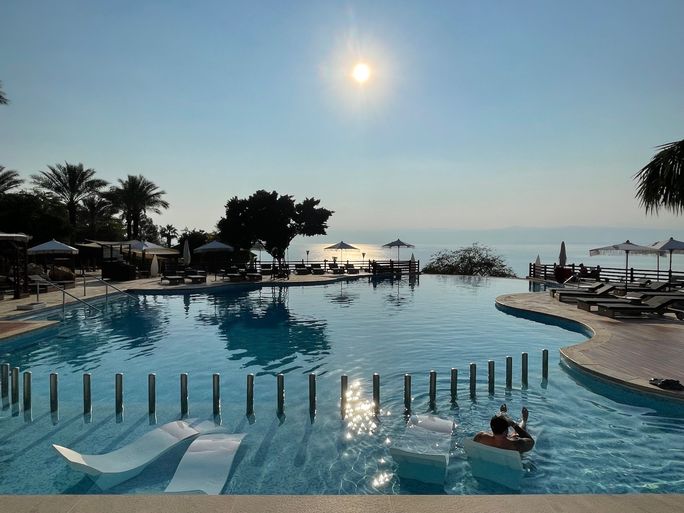
Infinity pool at the lowest point on Earth, Marriott Dead Sea Resort & Spa. (Photo Credit: Bruce Parkinson)
We spent a night in rustic comfort and beautiful natural surroundings at the Aljoun Forest Reserve, another at the comfortable four-star Aitch Boutique Hotel in Madaba. The trip concluded in luxury with three nights at the Marriott Dead Sea Resort & Spa, a glorious place of pools, greenery and a Dead Sea beach for floating. Service was outstanding.
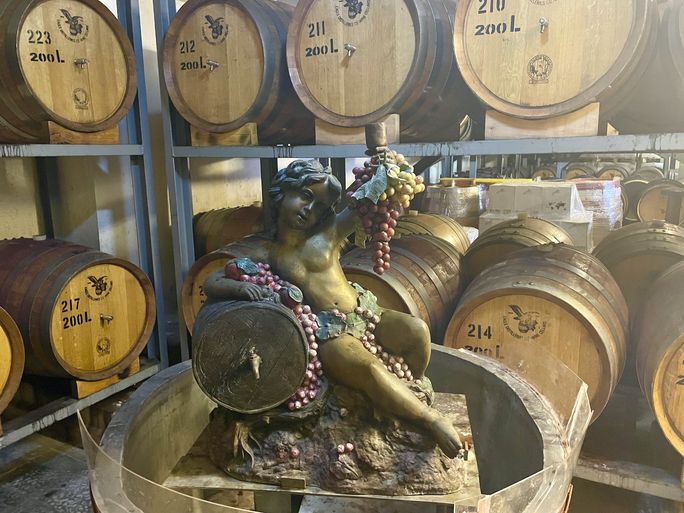
Jordan River Wines have won more than 250 international awards. (Photo Credit: Bruce Parkinson)
Turning Desert Into Wine
In a country with a 97% Muslim population, touring a winery and distillery was unexpected. But Eagle Distilleries has been making the anise-flavoured Arak since 1953, and delicious red and white wines from Jordanian grapes since 1975. Its Jordan River (JR) Wines division has won more than 250 international awards for its products. We learned about desert terroir and sampled freely.
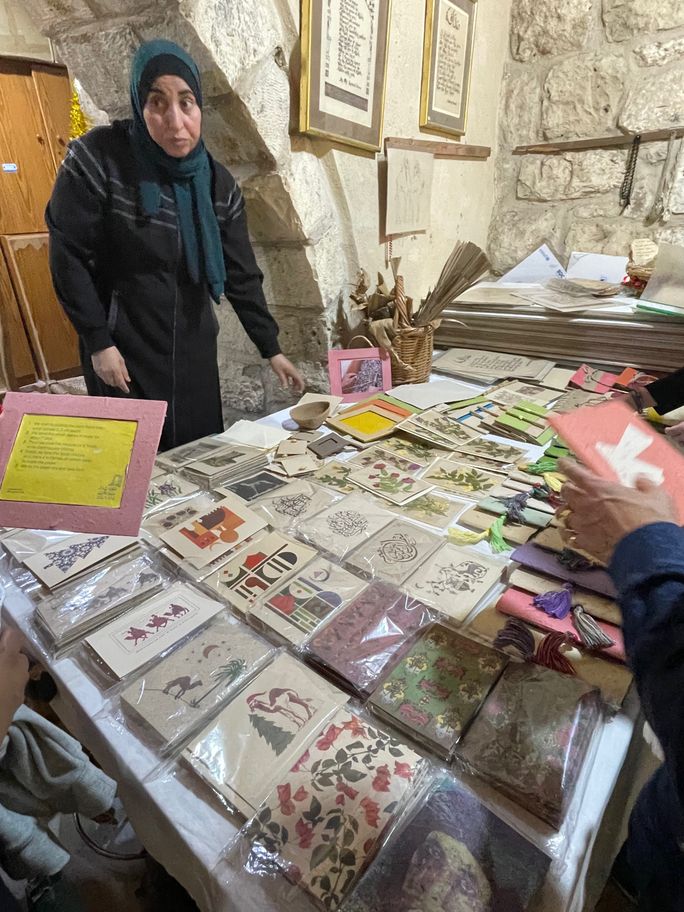
Handmade paper items are some of the products produced by the Iraq Al-Amir Women's Co-op. (Photo Credit: Bruce Parkinson)
Making Jordan Travel Meaningful
The Tourism Cares Meaningful Travel Map is a B2B tool that helps the travel trade and sustainably-minded travellers easily source organizations making positive social and environmental impacts in destinations. You can find Jordanian locations here. We visited several, including the Iraq Al-Amir Women Cooperative Society, the Bani Hamida Women’s Weaving Project and Jasmine House. Each offered enriching experiences and hand-made crafts and food products for purchase. Another moving stop was at the Princess Taghrid Institute for Development and Training, which raises up adult female orphans through skills training.
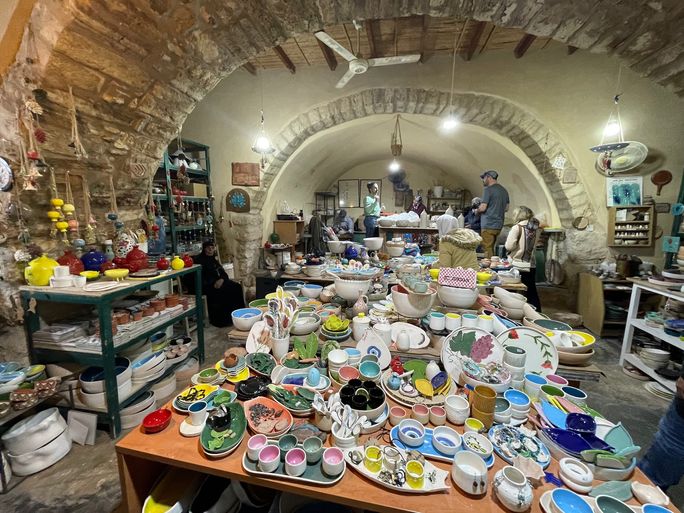
Handmade crafts for sale at the Iraq Al-Amir Women Cooperative Society. (Photo Credit: Bruce Parkinson)
Bring An Extra Bag
With tourism hugely affected by the war in Gaza, our group did its best to singlehandedly boost Jordan’s GDP by purchasing vast amounts of beautiful handicrafts – rugs, scarves, mosaics, jewellery, embroidered clothing, food products and more. The quality is outstanding, and the money supports thousands of local workers. It’s a win-win.
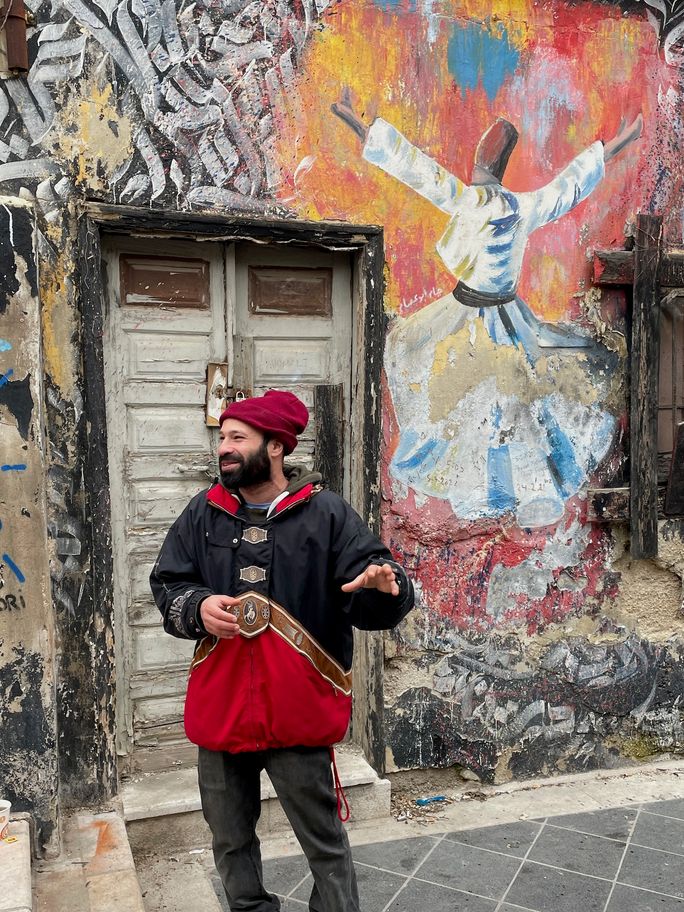
Alaeddin Rahmeh, street artist and hip hop/break dancer, led a fascinating tour of Amman's street art. (Photo Credit: Bruce Parkinson)
Going Underground In Amman
In yet another Jordanian surprise, street art is officially encouraged by the government, and we enjoyed a fascinating tour led by graffiti ‘writer’ and internationally-known break- and hip hop-dancer Alaeddin Rahmeh. There are about 100 street artists in Amman – 70% female – and their creations add colour to the ‘White City,’ so nicknamed for its pale limestone buildings. As well as being decorative, the street art plays a larger cultural role, as young artists challenge traditional norms and gender roles with their work.
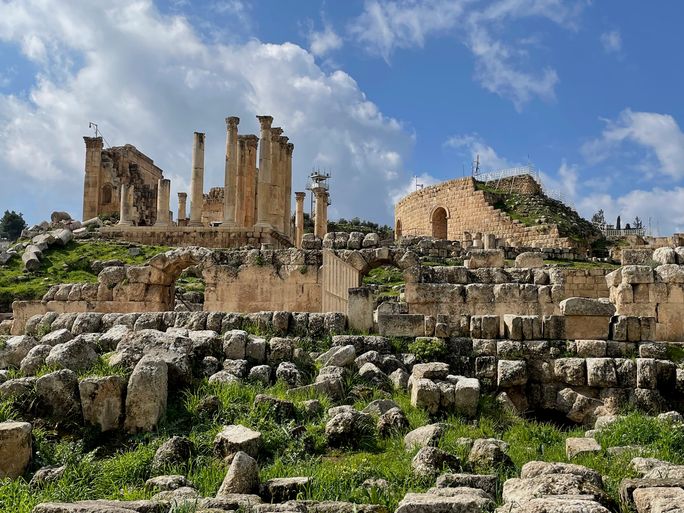
The sprawling Greco-Roman ruins in Jerash. (Photo Credit: Bruce Parkinson)
A World Of Heritage
Despite being not much larger than New Brunswick, Jordan is home to some of the world’s most important historical sites – including six on the UNESCO World Heritage List. We visited five of them during the trip: the stunning Nabataean caravan-city of Petra; 8th-century desert castle Quseir Amra; the Um-er-Rasas archeological site; Bethany Beyond the Jordan, believed to be the location where Jesus of Nazareth was baptized by John the Baptist; and As-Salt, a city known as “the place of tolerance and urban hospitality.” The land has been inhabited by humans since the Paleolithic period, and is often aptly described as an “open-air museum.” Another incredible site was Jerash, known for the sprawling ruins of a walled Greco-Roman settlement.
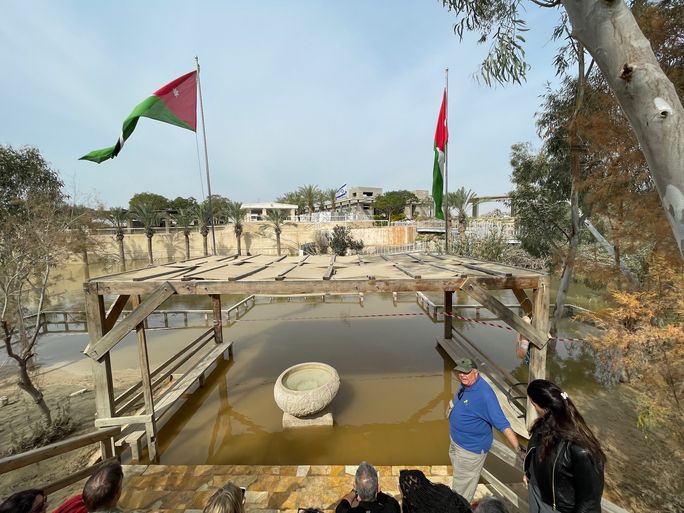
Al-Maghtas, or Bethany Beyond the Jordan, where believers say Jesus of Nazareth was baptised by John the Baptist. (Photo Credit: Bruce Parkinson)
The Pilgrim Path
The ancient biblical kingdoms of Moab, Gilead, and Edom lie within Jordan’s modern borders. This land east of the Jordan River is described as the only area in the Holy Land that links the lives of Abraham, Lot, Moses, Job, David, Ruth, Elijah, John the Baptist, Jesus and the Apostle Paul. Reminders of their stories can be found throughout the Hashemite Kingdom.
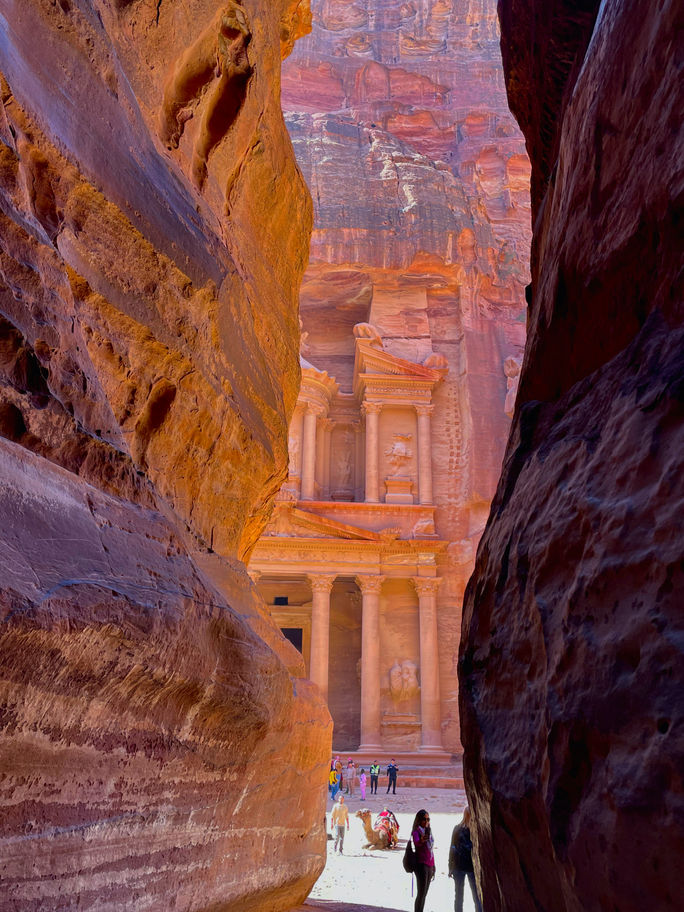
The grand entrance to Petra, one of the 'New Seven Wonders of the World.' (Photo Credit: Bruce Parkinson)
The Rose City: Eternal Petra
Declared a World Heritage Site in 1985, and known as one of the New Seven Wonders of the World, Petra was the capital of the Nabataean empire 2,000 years ago. The members of this civilization proved to be early experts in manipulating water technology, constructing intricate tunnels and water chambers. Several awe-inspiring structures are carved into sandstone, including the iconic Treasury, a 4,000-seat amphitheatre and the El-Deir monastery have also helped the site earn its fame. Rediscovered in 1912, Petra was largely ignored by archaeologists until the late 20th century, and the site still holds many unanswered questions.
A journey through Jordan touches all the senses – and the soul. What a treat to visit a place that I didn’t know was on my bucket-list until I experienced it. Now it's on my bucket-list of places to visit again.
Topics From This Article to Explore


