
by Mia Taylor
Last updated: 7:10 PM ET, Tue October 20, 2026
Officials in Spain have set their sights on reducing the tourism industry's seasonality, and a new report indicates the country is steadily achieving that goal.
The popular Mediterranean country has consolidated 47% of tourism activity outside the traditional peak travel season (June through August) and, in doing so, is outperforming other countries in the region in minimizing the highs and lows of seasonally driven travel, according to a new report from The Data Appeal Company, an AI-powered data intelligence firm.
Italy, by comparison, still sees 58.7% of tourism activity in high season, and in Greece the figure is even higher, with 72.7% of its annual tourism taking place during high season, which runs from May to September.
What's driving Spain's off-season demand?
The Data Appeal Company study, titled “The International Traveler that Transforms Spain,” takes a comprehensive look at the various forces behind Spain's growing off-season tourism demand, along with looking at the most popular locations in the country for such visitors and the types of activities they're seeking.
Culture, it turns out, is one of the primary interests among off-season travelers. However, family travel and tourists seeking active well-being experiences are the fastest-growing motivations, says the report.
Longer stays and emerging medium- and long-haul source markets also account for much of the off-season demand. In particular, long haul source markets such as Argentina, Poland, and Brazil are leading off-season travel in Spain. Visitation from these countries during the low and shoulder seasons has grown by +27.8%, +18.6%, and +13.1%, respectively, over just the past three years.
And not to be overlooked, specific regions in Spain are attracting a great deal of off-season interest among globetrotters.
Spain's Canary Islands have established themselves as a leading benchmark for non-seasonal tourism. The archipelago records the longest average stays of all the regions analyzed (an average of 6.6 nights among its primary source markets). The islands attract a high proportion of European couples and families and are experiencing growing demand for cultural experiences (+1.2%), family-oriented tourism (+3.2%), and wellness-focused travel (+2%).
“Our data intelligence shows that Spain’s major competitive advantage over other Mediterranean destinations lies in its ability to diversify the tourism experience during shoulder and low seasons, aligning with emerging trends in international demand," explained Carlos Cendra, chief marketing and communications officer for Data Appeal.
"The priority is to ensure a broad, segmented range of non-seasonal activities and experiences, in order to attract visitors throughout more months of the year and generate greater economic and social value for these destinations,” added Cendra.
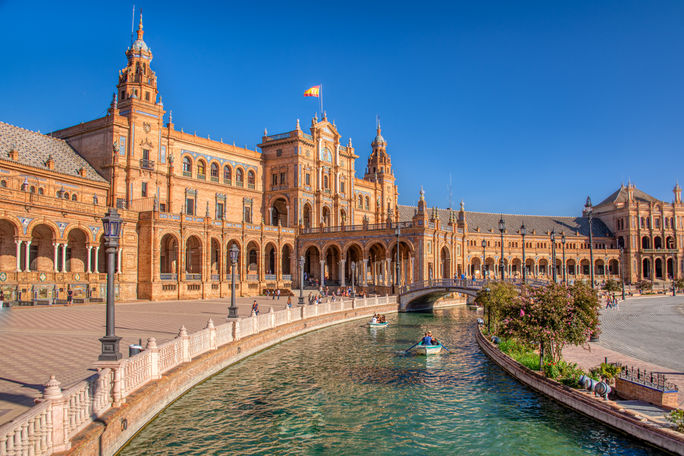
Seville, Spain (Photo Credit: Adobe Stock)
Benefits of off-season travelers
Growing off-season travel has a variety of upsides for popular countries, including reducing the burdens of overtourism during peak times and spreading the impact on resources and infrastructure more evenly throughout the year. Spain made history in 2024, welcoming 94 million international visitors to visit its beaches, medieval towns and bustling cities, yet with it came a strain on residents, with summer reaching a fever pitch in resident protests and government action.
There are also economic benefits. For instance, mid-to-high and high-end accommodations attract, on average, 4 out of every 10 travelers visiting Spain during the low or off-season. This proportion is even higher for hotel stays along the Mediterranean coast and islands (44.2% of total hotel stays) and in the Canary Islands (58.2%). This is noteworthy because it means non-seasonal demand is contributing to a higher economic impact per visitor.
Spanish officials, meanwhile, stressed that developing off-season travel will remain an important focus.
“Advancing the reduction of seasonality in Spanish destinations remains a strategic long-term priority. The opportunities it unlocks for destinations are substantial, and we are moving forward with determination,” Miguel Sanz, Director of Turespaña, said as part of the report.
Topics From This Article to Explore


