
by Mia Taylor
Last updated: 7:15 PM ET, Wed September 30, 2026
Setting aside the highly curated, polished and often unrealistic version of travel that TikTok and Instagram influencers post, exploring a new place is rarely an entirely perfect experience.
It’s only natural for mishaps or unexpected challenges to happen now and then. It’s simply the nature of travel. And in some cases, those unplanned twists and turns are part of the beauty of travel, leading to especially memorable or magical moments.
But sometimes those setbacks can cost travelers quite a bit of money.
According to a poll of travelers from the United States, the UK and Australia commissioned by Aven Hospitality and conducted by Talker Research, 73% of travelers have experienced some major travel mishap.
The most common issue was bad weather disrupting a trip (26%), which is hardly surprising given the rapidly worsening fallout from climate change. Getting sick or injured while traveling was the next most common challenge (16%), followed by arriving at a hotel only to find a specific amenity wasn’t available (14%).
Other travelers surveyed said they’ve experienced fails like having their phone die or losing internet at a critical moment (14%) and getting lost while traveling (14%) – as well as booking an accommodation that was falsely advertised or did not meet the travel group’s needs (13%).
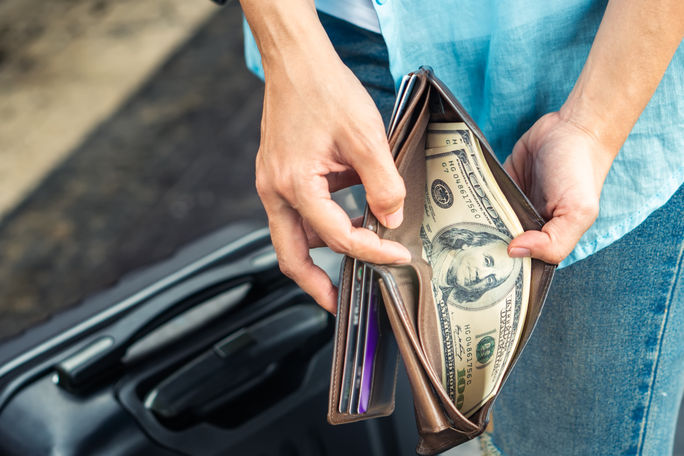
A traveler rifling through their wallet. (Photo Credit: Adobe Stock/Chan2545)
The cost of travel challenges
Now for the price tag behind all of these setbacks. The survey, which asked respondents to share their absolute worst travel letdowns, reveals that travel issues of various types cost globetrotters an average of nearly $2,500.
In addition, travelers said they’ve lost $1,891 purely because of inaccurate or outdated information while booking a hotel, or because their expectations weren't met when they arrived at a venue. However, the exact amount of this type of loss varies significantly across age groups. Millennials' estimated losses are almost three times as high as baby boomers ($2,496 vs. $956).
The international poll also found that over half (51%) of travelers believe travel mishaps they’ve experienced stem from a lack of accurate information when planning and booking a trip.
“With so many sites, reviews and recommendations to sort through, travel planning can quickly become overwhelming,” explained Noreen Henry, chief revenue officer at Aven Hospitality.
“Travelers are trying to make decisions across transportation, routes, accommodations, amenities, activities and dining — and one inaccurate detail can have a ripple effect on the entire trip,” added Henry. “The survey shows that when expectations don’t match reality, the impact can be more than frustrating; it can also be costly.”
And one last note. It appears that being required to spend thousands of dollars on travel setbacks is also taking a toll on behavior: 85% of survey participants said they permanently changed their trip planning and booking behaviors afterward because of a bad travel experience.
Topics From This Article to Explore


