The good news is that the 30 biggest airports in Canada have seen passenger capacity return to 98% of 2019 levels on average, according to the Canadian Airports Council. The bad news: the next 30 are at barely 70%.
Canada’s air travel bounce-back from COVID has seen more traffic diverted to the most popular routes. Over the past five years, flight volumes have jumped 19% for Montreal-Vancouver, 12% for Toronto-Vancouver, 10% for Calgary-Vancouver and 51% for Ottawa-Calgary. The numbers were sourced from aviation data firm Cirium by the Canadian Press.
On these busy routes, airfares have actually dropped over those five years, despite high inflation and robust fare increases on less-popular city-pairs.
Smaller centres are suffering from a lack of lift. For example, Newfoundland’s Gander Airport has seen four routes disappear. “A third of our passengers have vanished into thin air,” said airport CEO Reg Wright in a Globe and Mail story.
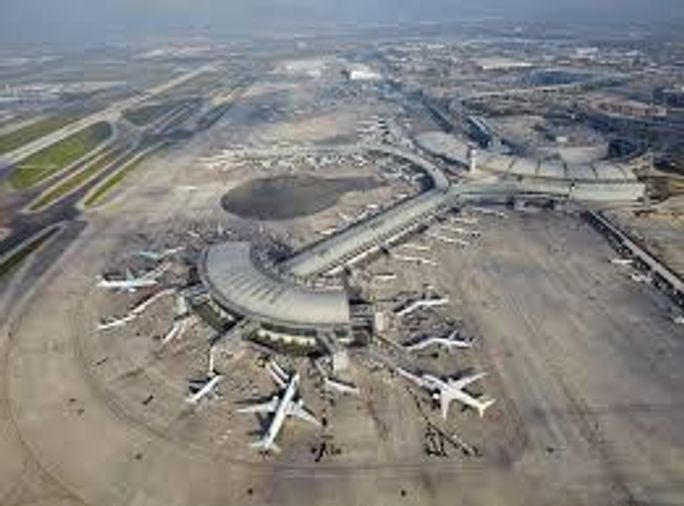
Toronto's Pearson Airport is busier than in pre-COVID times. (Photo Credit: Aéroport Pearson de Toronto)
Smaller cities are also seeing higher fares as they are abandoned by airlines. For example, the number of non-stops between Sault Ste Marie and Toronto were cut in half since May 2019, while average fares have soared by 54%
Aviation publication Simple Flying says August 2024 will see nearly 20% fewer weekly domestic flights in Canada, with overall weekly domestic seats down 6.1% compared with August, 2019.
Simple Flying says the biggest losers include Kingston, Ontario, which lost 33 weekly domestic flights, and Cape Breton, whose residents now need to travel through Montreal or Toronto to get to Halifax, which is just 400 kilometres away.
It’s an old story in Canada. Some domestic routes are simply not profitable for airlines. But they are also critically important in the transportation of people and goods.
Gander Airport’s Wright summed it up in a comment to the Canadian Press.
“Aviation is really a load-bearing wall holding our country together. And there’s a lot of rural and remote communities like my own that are wholly dependent on air travel to have that economic and social utility and be meaningful participants in the global village,” he said. “The stakes are very high.”
Topics From This Article to Explore


