CUPE, the union representing 18,500 flight attendants nationwide, is applauding an NDP bill that would require airlines to pay flight attendants their full rate of pay for all hours worked.
According to the union, as it currently stands, most airlines in Canada only pay flight attendants when aircraft are in motion, leaving them performing an average of 35 hours of unpaid work every month.
Several CUPE members from the airline sector were on hand to support the tabling of the legislation in the House of Commons by NDP MP Bonita Zarrillo.
“Canada’s flight attendants have been sounding the alarm about the abuse of unpaid work in our industry, and we applaud the NDP for answering the call with this legislation,” said Wesley Lesosky, an Air Canada flight attendant and President of CUPE’s Airline Division.
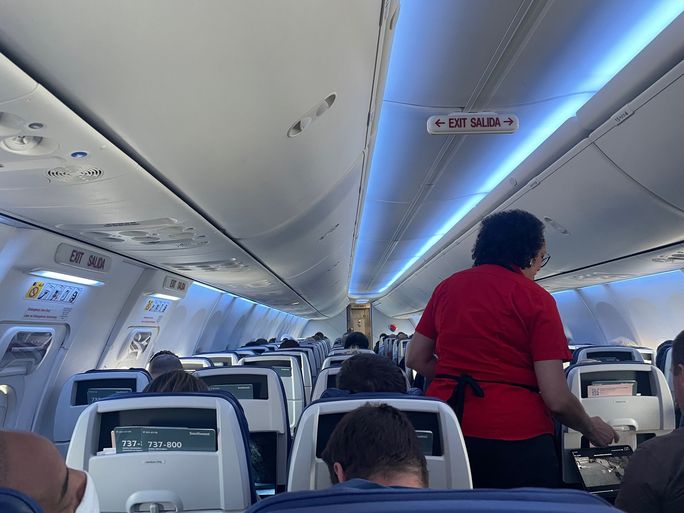
The cabin inside of a Southwest Airlines flight. (photo by Patrick Clarke)
“We’re calling on the government and other opposition parties to back this NDP bill that sets the standard for what flight attendants need going forward, and get it passed before the next election.”
Rena Kisfalvi, a Sunwing flight attendant and Secretary-Treasurer of CUPE’s Airline Division, said in a CUPE statement: “For decades, our employers have tried to convince us that the practice of forcing employees to perform hours and hours of free work is normal, because that’s just the way it’s always been. Well, those days are over. We simply won’t accept it any longer.”
Flight attendants will be the next front in Canada’s airline-labour relationship. Air Canada's 10,000 flight attendants, represented by CUPE, will be in a legal position to strike next year, following the expiration of their collective agreement on March 31, 2025.
After the contract expires and before they can legally strike, AC’s flight attendants must go through collective bargaining with the airline. If an agreement isn't made, a conciliator will be appointed, and if that fails, the parties will enter a 60-day cooling period. Once in a legal strike position, union members must vote to strike and issue a 72-hour notice before job action.
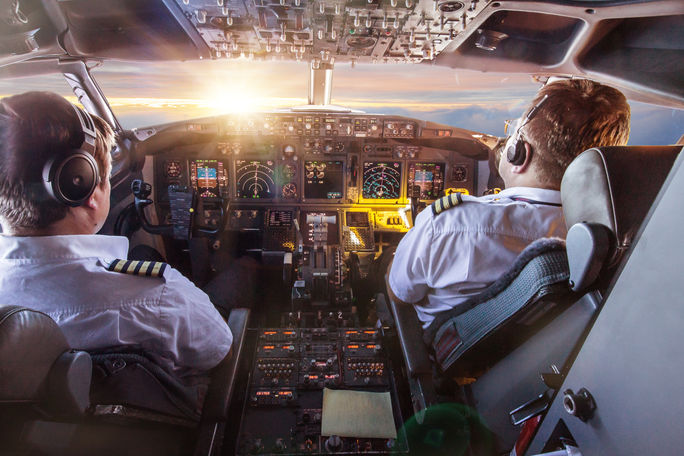
Pilots in the cockpit during a flight with commercial airplane. (Photo Credit: Lukas Gojda / Adobe Stock)
This year has been marked with airline labour disruptions, as WestJet’s mechanics grounded the airline by striking during the Canada Day long weekend before achieving a deal. Air Canada went to the brink with its pilots’ union in mid-September, before a last-minute deal that has recently been ratified.
Air Transat will begin negotiating with its pilots in January, and they’ll be using the AC pilot contract as a model. The four-year deal will see AC pilot salaries increase by more than 40%.
Captain Bradley Small, chair of the Air Transat Master Executive Council (MEC) of the Air Line Pilots Association, released a statement that strongly encouraged Air Transat management “to follow in the footsteps of Air Canada by acknowledging the market trends in the aviation sector and recognizing the value, skill, and experience our pilots bring to the airline and our passengers daily.”
In 2023, CUPE’s Airline Division launched the Unpaid Work Won’t Fly campaign, which has been raising awareness about what it sees as unfair working conditions in the industry. Air Canada has a webpage dedicated to contract talks and other negotiations.
Topics From This Article to Explore


