My in-laws still talk about a dinner we enjoyed on a farm in Eastern Cuba more than 20 years ago. Six of us, along with an interpreter, joined three generations of a farm family for an evening meal. We toured the fields, then helped cook shrimp, rice and fresh-picked veggies.
We brought wine and rum – neither easily available to Cubans at the time – and the abuelo (grandfather), let us know that he hadn’t tasted wine since the revolution of 1959. He made up for it that evening, frequently catching my eye and moving his hand in a ‘fill my glass’ gesture. We laughed, told stories about our different lives and left with hugs and memories.
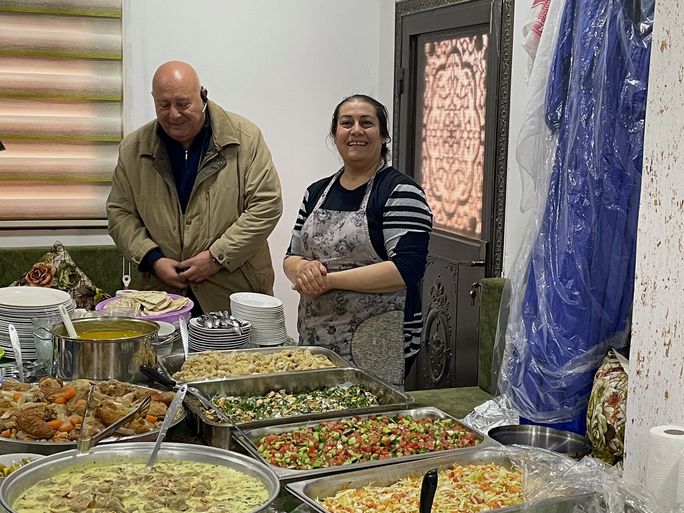
Home-cooked meal with a Druze family in Jordan: these are the experiences you remember. (Photo Credit: Bruce Parkinson)
The rest of our all-inclusive resort trip is a distant memory, but recollections of that visit are vivid. It came to mind again recently when I met Greg Takehara, CEO of Tourism Cares, a non-profit organization with a mission to mobilize leading travel associations and companies to move travel in a positive direction – one that provides tangible benefits to local hosts.
Tourism Cares celebrated its 20th anniversary in 2023, and released a ‘vision’ statement for the next two decades.
Here’s a snippet:
“We envision a world in which the resources we promote through tourism are safeguarded, and all communities affected by tourism have the opportunity to thrive. Our vision is one of economic opportunity, equity, and climate action through the transformation of the travel industry: host communities take centre stage; technology enhances inclusivity and accelerates sustainable operations; and authentic, responsible experiences become the default.”
Takehara, who has a background in travel insurance, has been involved with Tourism Cares since it was founded shortly after the turn of the millennium by Bruce Beckham. It began by mobilizing U.S. travel industry members on volunteer clean-up and restoration efforts, including in New Orleans following Hurricane Katrina.
In the following years, Tourism Cares has expanded the scope of its activities, including providing conservation grants, awarding scholarships to students interested in sustainable tourism, and holding conferences around the globe shining a spotlight on how tourism can be a force for good.
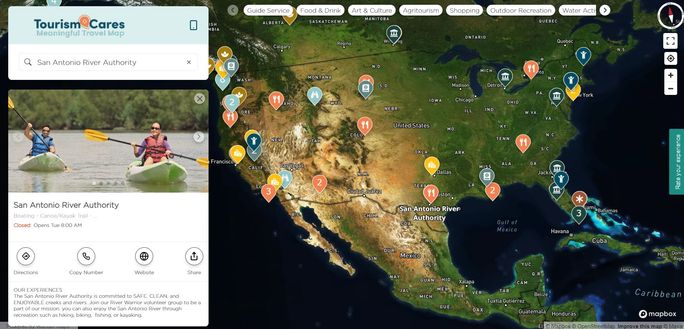
The Meaningful Travel Map offers an easy way to find vetted, responsible and sustainable experiences, accommodations and more. (Photo Credit: Tourism Cares)
Since 2017, Tourism Cares has put a focus on ‘Meaningful Travel,’ fostering partnerships with destinations and the changemakers within them who are creating tourism enterprises with positive impacts “for the people and places of travel.”
The result of those efforts is the Tourism Cares Meaningful Travel Map, an interactive B2B tool that helps the travel trade and sustainably-minded travellers easily source organizations making positive social and environmental impacts in destinations.
Tourism Cares accepts applications and vets tourism enterprises that wish to be included on the map. The first destination to get on board was Jordan, in an initiative driven by Malia Asfour, Managing Director, Jordan Tourism Board North America. More than 150 tourism enterprises were vetted, with a dozen making the initial cut.
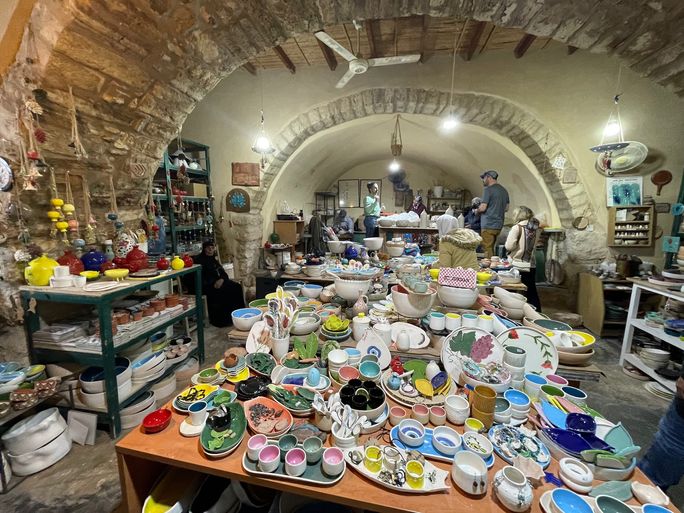
Handmade crafts for sale at the Iraq Al-Amir Women Cooperative Society. (Photo Credit: Bruce Parkinson)
Jordan is where TravelPulse Canada met Takehara, as he returned to view the progress of some of the early dots on the Meaningful Travel Map, like the Bani Hamida Woman Weaving project and the Iraq Al-Amir Women’s Cooperative. He found both had evolved into bigger, more sophisticated operations that are much more impactful for hundreds of women and families in nearby villages.
“It makes me feel very optimistic when I can go back after six years and see them thriving. It takes time and multi-sector cooperation, but the results are inspiring,” Takehara said.
For Jordan, initial efforts focused on social tourism enterprises, but the criteria to be listed on the Meaningful Travel Map has broadened to include environmental, regenerative and community tourism projects, typically local ventures that struggle to gain attention.
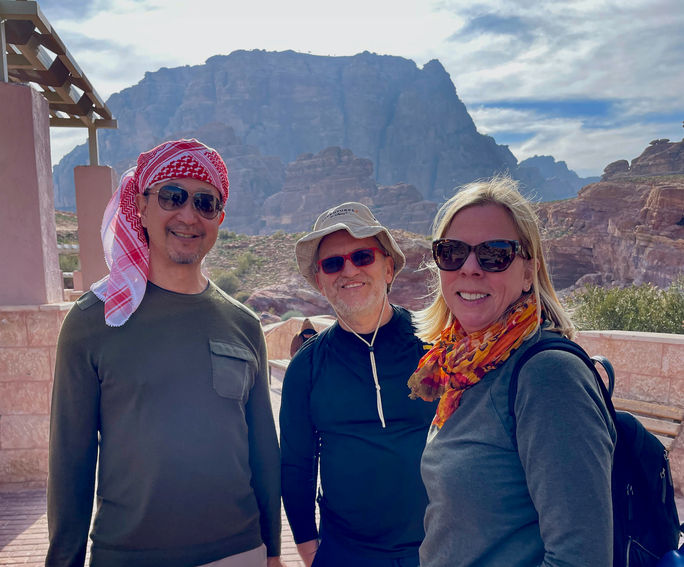
Greg Takehara, (left), CEO of Tourism Cares, JohnMichael Beck, Manager, Trip Operations, Land and Cruise, Adventures and Expeditions, The Walt Disney Company and Kimberley Daley, CEO, Daley & Company and board member of several responsible travel organizations. (Photo Credit: Bruce Parkinson)
In 2019, Tourism Cares brought 70 cross-sector travel industry representatives – including major tour operators -- to Jordan to visit social tourism enterprises with hopes that they could be included in future tours. Among them were Brett Tollman, CEO of The Travel Corporation, and Goway General Manager Emma Cottis.
“You come back from Jordan after this with a lot more than photographs of Petra,” said Cottis. “You come back having met the people and really understanding the warmth of the people of Jordan.”
For his part, Tollman said: “Jordan far exceeds every anticipation and expectation that I could have had.” Today, some of the places Tollman visited are included in The Travel Corporation’s Make Travel Matter experiences, which feature “conscious travel” experiences that reflect United Nations sustainable development goals.
Takehara says travel advisors can add to their value by introducing clients to the experiences offered through the Meaningful Travel Map. “Talk to your clients about what’s important to them. What types of experiences are they looking to have? Add it to the discussion. You might be surprised.” Advisors can learn more about sustainable travel through the Meaningful Travel Platform Education.
The Meaningful Travel Map is not just focused on developing nations. Sustainable travel is a critical future goal even in the richest nations. Map participants now include such diverse destinations as Norway, Thailand, Florida’s Kissimmee, Canada’s Victoria, Panama, and the newest member, Scotland.
As industry members, we know that travel and tourism has the power to break down barriers and build bridges. We also know that over-tourism and irresponsible tourism can destroy wild places and negatively impact local communities. For our own industry to survive and thrive, the work of organizations like Tourism Cares is essential.
Topics From This Article to Explore


