The minibar was initially invented in Germany in the 1950s and became popular in hotels worldwide in the following years. As an integral part of the hotel experience since the 1970s, it was seen not only as a practical convenience, but also as a sign of prestige. Today, however, fewer guests value a minibar, so it is no surprise that hotels are gradually removing them from their rooms and focusing on more personalized concepts instead. However, the decision to remove minibars is not only based on guest demand, but also on practical and environmental considerations:
Sustainability aspects: Minibars consume a lot of energy, especially in hotels with many rooms. In addition, packaging waste and unused products create unnecessary waste.
Low demand: Many guests rarely or never use the minibar. Drinks and snacks are often more expensive than at the hotel bar or nearby shops.
Hygiene issues: Minibars are a challenge to maintain and clean, creating extra work for the housekeeping team.
Noise reduction: Refrigerators often make annoying noises that can disturb guests' sleep quality.
Sustainable Alternatives to the Minibar
Sustainability-oriented hotels, such as the partners in the Green Pearls network, are already focusing on innovative alternatives that emphasize the idea of sustainability. While some hotels are eliminating minibars for good, others are offering sustainable and local solutions to ensure that guests still have a comfortable experience.
A minibar is a requirement to earn or maintain a star rating, so the hesitation to do away with them completely is understandable. Some hotels are getting around the problem by having empty bar fridges in rooms for guests to stock with their own items, or to be filled only upon request. Others are offering communal snack stations, often featuring locally sourced food items. Others still are turning to technology for help; allowing guests to order snacks via the hotel app, but not stocking in-room fridges.
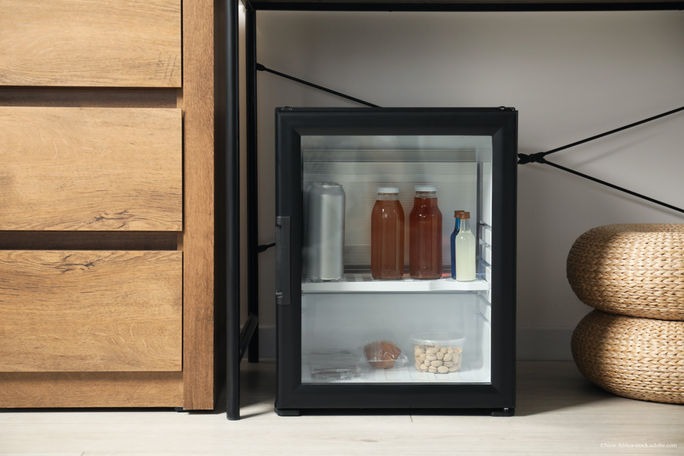
A minibar featuring local juice and regional products (Photo Credit: Green Pearls)
Minibar: Essential or Unnecessary?
Guest reactions to the new minibar concepts are mixed. While some welcome the sustainability and flexibility, others miss the classic minibar. "Some guests would like to have a minibar, but that's rare," says Klaus Pichler of Hotel Weihrerhof in South Tyrol. "Our guests can still cool important things with us," he continues. This is a little difficult with the star classification, but in the end, it was not a problem, he concludes.
Some guests appreciate the ability to order drinks and snacks individually or use the minibar as a personal refrigerator. Others feel restricted by the lack of a minibar and miss the convenience of having a selection of drinks and snacks at their fingertips. However, hotels like Gut Sonnenhausen, which never had a minibar in the room and focused on other services from the beginning, often report positive feedback from their guests. They appreciate the central "honesty bar" or other common areas as a pleasant alternative.
Minibars and Hotel Philosophy
Overall, it is clear that the acceptance of new minibar concepts depends heavily on guest expectations and preferences. Hotels that actively involve their guests in the decision-making process and are transparent about the reasons for their decisions often receive better feedback. Digital ordering via apps or the option to use the minibar individually is perceived by many guests as a practical and modern solution.
Whether they have a minibar or not, hotels are increasingly looking for sustainable, flexible solutions that meet the individual needs of their guests. A minibar is no longer a necessity in all hotel categories, but in many places it is a question of hotel philosophy and guest expectations.
News release provided by Green Pearls Network
Topics From This Article to Explore


