
by Natasha Lair
Last updated: 4:25 PM ET, Wed November 26, 2025
Aruba Tourism Authority leaders say Canadians want to travel responsibly — but many feel the industry isn’t giving them the tools.
During a recent visit to Toronto, Ronella Croes, CEO of Aruba Tourism Authority (ATA) and Sjeidy Feliciano, Area Director, North America, at ATA, said new research shows an overwhelming global shift toward mindful travel.
According to their findings, 96% of travellers now believe responsible tourism should be the standard, and 77% say the industry has not provided enough guidance or options to help them do their part.
In Canada, Croes said the gap is even clearer: Only 16% of Canadians feel they currently receive adequate guidance.
“That’s a huge number of people whom we can assist,” Croes told TravelPulse Canada.
 Ronella Croes, CEO of Aruba Tourism Authority (Photo Credit: ATA)
“Canadians want options, they want communication, and they want clarity around the cost of contributing — and still, 69% say they are willing to contribute financially in some way to support responsible tourism.”
A Strategic Shift for Aruba
With 70% of Aruba’s GDP tied to tourism, Croes said the island has spent the past several years shifting its strategy toward a model that embeds responsible tourism into every layer of planning.
“We’ve been in this business for over 50 years, and we knew a shift was needed,” Croes said. “Our community needs time to breathe, and we want to ensure visitor experiences remain high-quality while protecting the well-being of our people.”
Aruba has roughly 110,000 residents, but receives 1.2 million stayover visitors annually — plus nearly 900,000 cruise passengers.
RELATED: Aruba Launches New Voluntourism Initiative
“That movement of people is significant,” Croes noted. “Engaging visitors — or as we now call them, ‘guests’ — is essential to protecting the island.”
Aruba’s new visitor-facing positioning, “When you love Aruba, it loves you back,” is centred on mindfulness, respect for nature and culture, and shared responsibility.
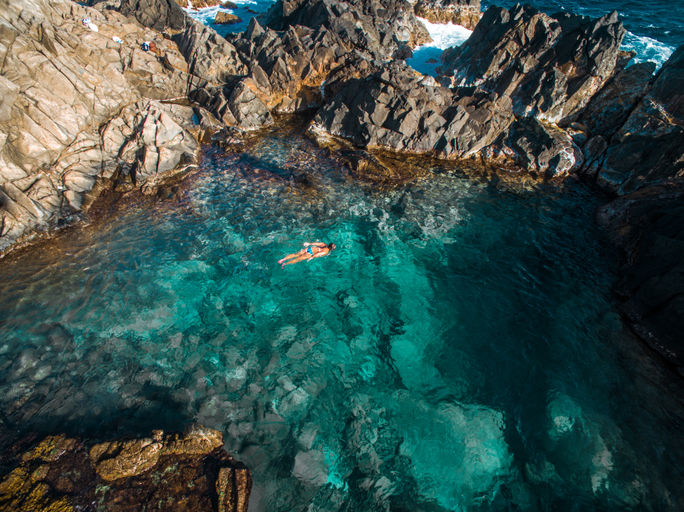
Natural pool, Aruba (Photo Credit: ATA)
Canadian Market Growing, With Repeat Travel Strong
Canada is currently Aruba’s second-largest market, generating about 70,000 arrivals annually. Year-to-date, Croes said Canadian arrivals are up 10% compared to last year, with 73% flying from Toronto.
A notable trend: Canadians split evenly between hotel stays and alternative accommodation — and many own property on the island.
“That 42% alternative accommodation number is very high compared to other markets,” Croes said. “For many Canadians, Aruba truly is their home away from home.”
Airlift, New Resorts and All-Inclusive Options
Aruba currently has direct service from Canada, and Feliciano said they expect airlift to grow modestly next year.
The island is also diversifying its hotel stock. Aruba restricts all-inclusive development to a maximum of 40% of transient hotel inventory by law — a measure implemented to preserve balance, mobility, and the local economy.
A new all-inclusive, Secrets at Baby Beach, opened this year, bringing a fresh option in a less-developed part of the island. Aruba has also welcomed 152 new rooms at another property, and Iberostar has launched “Joya” on Aruba — its first EP (non-all-inclusive) concept, reinforcing the destination’s selective approach to development.
“We’re very intentional,” Croes said. “We foster new areas and new experiences without becoming a 100% all-inclusive island.”
Experiential, Nature-Based and Wellness Travel Growing
Asked what sets Aruba apart for Canadian travellers seeking slow, mindful, experiential trips, Feliciano pointed to nature-based activities and “the feeling of belonging.”
“We have the right combination of elements — the wind, the sun, the water, the desert landscape,” she said. “Water is healing. Nature is healing. And our experiences reflect that.”
Aruba’s National Park covers 25% of the island, offering hiking, guided nature activities, and 50+ kilometres of biking trails designed to deepen visitors' connection to Aruba’s landscape.
 Sjeidy Feliciano, Area Director, North America, at ATA (Photo Credit: ATA)
“Wellness is growing, and Aruba is ready,” Feliciano added. “Yoga on the beach, hiking, slow travel — these are becoming core parts of the experience.”
She also highlighted Aruba’s strong wedding market and recent culinary events designed to bring locals and visitors together.
Climate Resilience Now Central to Tourism Strategy
Aruba is also preparing for long-term climate impacts.
Croes said the island has established a National Climate Resilience Council, completed a Risk Vulnerability Index, and introduced “climate impact atlases” outlining the projected effects of rising temperatures and emissions.
Since 1955, Aruba’s average temperature has increased by 1°C — a small number, Croes noted, but one that could climb significantly without intervention.
“Tourism must play a role in climate action,” she said. “This is not separate from tourism — it is part of tourism.”
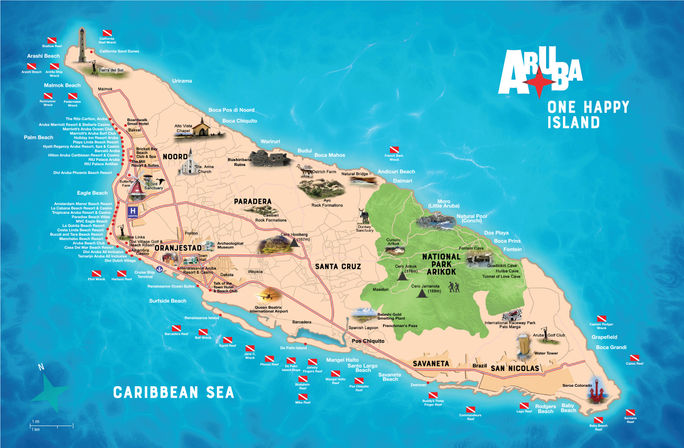
Aruba map (Photo Credit: ATA)
The Aruba Promise: A Pledge to Travel Mindfully
At the heart of this approach is the Aruba Promise, a pledge inviting travellers to see themselves not just as tourists, but as guests of the island. By committing to consider their footprint, embracing a slower pace, and travelling responsibly, visitors help protect Aruba’s natural beauty and biodiversity, ensuring it remains vibrant and welcoming for generations to come.
Created by the Aruba Tourism Authority, the Promise encourages guests to live the spirit of Masha Danki—a message of gratitude and respect for both the Aruban people and the land and marine life that call the island home. Canadians, who make up an important market, can take the pledge and learn more at https://www.aruba.com/us/aruba-promise.
Topics From This Article to Explore


