It’s one of those destinations you almost don’t want people to know about.
It’s France in the Caribbean, a mix of everything travellers love about the French; the food, the sophistication and the culture, together with everything travellers love about the Caribbean; the sun, clear water and plenty of outdoor activity options.
The island of Martinique, located in the Lesser Antilles a stone’s throw from St. Lucia, is an overseas French territory that is what could be referred to and heard many times on our recent press trip, an undiscovered gem.
TravelPulse Canada visited the island last month as a guest of Club Med Boucainers (Buccaneer’s Creek) the only all-inclusive property on the island, where it just finished first phase of its renovations since opening in 1989.
Air Canada is launching its direct Toronto to Martinique December 16, which would make getting to the island so much easier – and likely much more popular.
And herein lies the (tongue in cheek) dilemma.
Martinique is an island that almost feels untouched by tourism. It’s unique in that tourism is a part of the country’s economy, but not as large as one might think – roughly only about 10% of locals work in the industry; that number can swell to 15-20% during high seasons, but far short of the percentage of other Caribbean countries. The main industry is agriculture, sugarcane and it’s truly bananas - more than 300,000 tons of the fruit are exported every year.
Arrival at the airport has a lot of the charm of a European destination, we feel more as though we’re in urban France, with highways and towns with infrastructure as in Europe. Everything is in French of course, which only adds further to the appeal of a European getaway with the ease of a Caribbean flight.
Within that French culture, there’s also a very interesting history. Martinique was the first Caribbean island to ban the slave trade. It’s also the home to Mount Pelee and its surrounding Pitons du Carbet which have recently been designated a UNESCO heritage site.
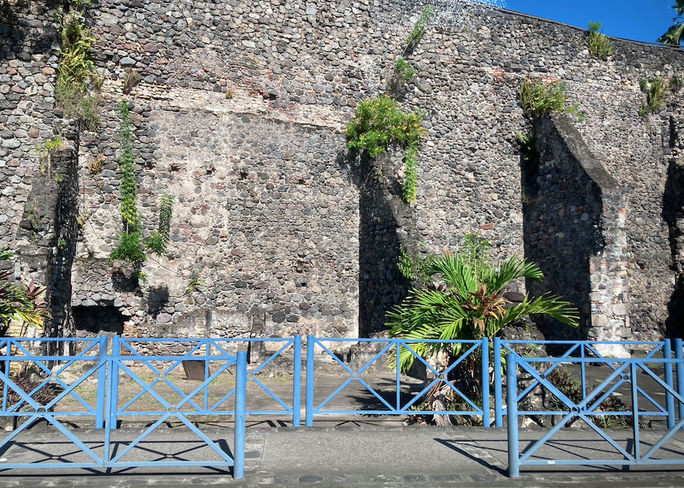
Remnants of the port town of St. Pierre are still intact in some areas. (Photo Credit: Marsha Mowers)
Its eruption on May 8, 1902 was the most lethal volcanic eruption of the 20th century, responsible for catastrophic devastation to the town of St. Pierre, killing 30,000 people within minutes. The town never fully recovered, despite ongoing efforts throughout the years to rebuild. Today, the town has about 5,000 residents, however it is now a stop for many cruises including MSC, Celebrity, and Royal Caribbean.
Jardin de Balata is one of the island’s treasures, and an ode to the country’s moniker as the “island of flowers.” The former home of Jean-Philippe Thoze, a horticulturist, landscape designer and poet, the garden is a short drive from Fort-de-France and is said to have healing powers for its guests who walk through. (Though the suspension bridge walk might not be considered relaxing for some!).
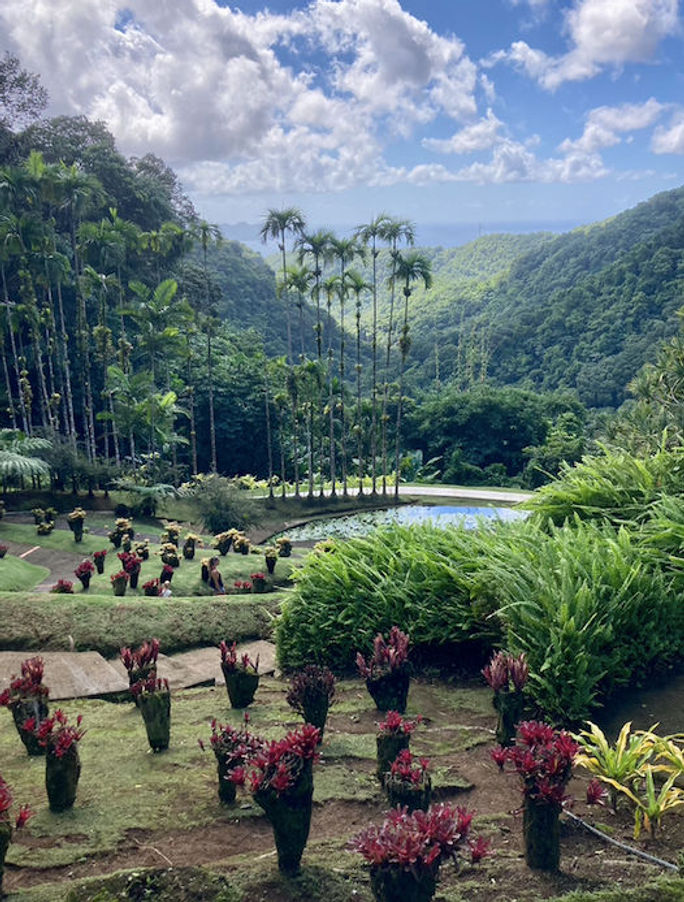
Le Jardin de Balata in Martinique
Club Med Boucainers (Buccaneer’s Creek) is the only all-inclusive property on the island, the rest of the roughly 50 hotels are locally owned and mostly independent – there are no other big hotel chains on the island.
Martinique is a perfect destination for clients who have experienced a lot of what the Caribbean offers and are looking to do something different in the sun. It would also be an ideal option to tag a visit to nearby Guadeloupe or Saint Lucia (roughly 3 hours).
Just don’t tell too many people about it.
Topics From This Article to Explore


