Air Canada is raising its checked-bag fee by $5 for on basic and standard economy fares – matching the move made by WestJet a few days ago. WestJet’s increase came after U.S. carriers – American, United and JetBlue among them – boosted their own bag fees in recent days.
The new charges will add to airline coffers, but they will likely come at an operational cost. As checked-bag fees rise but carry-on remains free with many airlines, more passengers are choosing to fly with carry-on only – and lots of it.
We’re all familiar with airport scenes where gate agents are forced to repeatedly cajole passengers to voluntarily check their carry-on bags, because there simply isn’t enough overhead bin space for them. Since many are reluctant to volunteer, this often leads to late departures and chaos during boarding as flight attendants work to accommodate all the bags.
Those who do pay for checked-bags are punished too – as they are often forced to put smaller carry-on bags, coats and souvenirs at their feet, because the bins are packed with roller bags.
For travel booked after February 27, AC will now charge between $35 and $42 for the first checked bag for basic and standard economy fares in North America, the Caribbean, and Central America. WestJet is also charging between $35 and $42 for the first checked bag for economy fares booked after February 14.
It was 2014 when the tradition of a free checked bag on domestic flights was disrupted by Air Canada, WestJet and Porter Airlines adding a $25 check-bag charge on cheaper fare categories.
Airlines tend to follow WestJet’s line that bag charges keep fares lower for all travellers. Low-cost carriers maintain that the fees – which often include charges for carry-on bags too -- fit with their ethos of only charging passengers for what they need, and not for what they don’t
Fred Lazar, a York University associate professor of economics who specializes in the aviation industry, told CBC news that he has seen fights break out among passengers for carry-on space.
"If you're charging for checked bags, you better start charging for carry-on," he said. "Otherwise, people are going to do the only logical thing, they're going to shift from checked bags to carry-ons, which are free."
When you book the cheapest fares with Porter Airlines, including on its new jet services, carry-on bags come with a cost. The same goes with Flair Airlines. Sunwing introduced a $25 each-way carry-on bag fee in 2022.
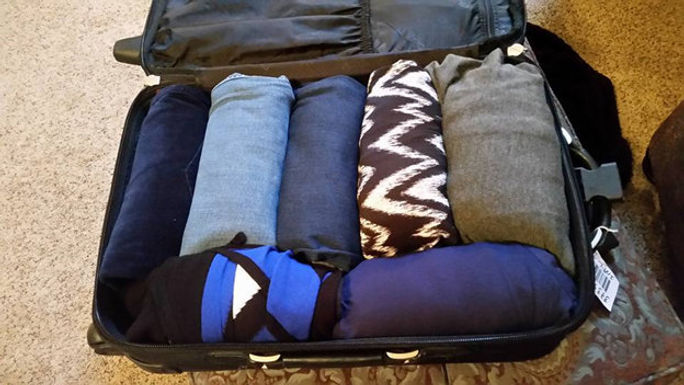
More passengers are avoiding bag fees by travelling with carry-on only, but that causes problems too. (Photo Credit: Holly Johnson)
Will WestJet and Air Canada move in this direction? They’re not saying, but they never do – until they do.
Ancillary fees have become a major source of revenue for just about all airline business models. As well as baggage fees, lower-priced tickets often come with cancellation and change fees, as well as surcharges for meals and internet access that don’t show up in advertised lead-in prices.
In some ways this is good news for travel advisors, who can add to the value of their service by helping clients navigate through the fare puzzle. And we all want Canadian airlines to be healthy and viable, so they don’t join the long list of failures, including the most recent demise of Lynx Air.
One thing is clear: the new fees won’t do anything to ease the stress of getting on an airplane. And we’ll still hear this constant refrain from the gate as we wait to board: “Attention passengers: we have a full flight today and we need at least 22 of you to volunteer to check your carry-on roller bags. If we don’t get those volunteers, your departure could be delayed.”
Topics From This Article to Explore


