Same vibe, half the price. Destination dupes are having a moment.
Travellers still want the romance of Paris, the history of the Pyramids of Giza, and the once-in-a-lifetime feel of places like Machu Picchu.
What’s changing is how they get there.
Or more accurately, whether they get there at all.
According to recent data from Skyscanner, 52% of Gen Z travellers plan to travel abroad more in 2026, even as fewer than half intend to spend more on flights. The disconnect is reshaping how trips are planned.
The rise of destination dupes
These alternatives offer a similar look, feel or experience to well-known landmarks, often at a lower cost, with fewer crowds.
Long-haul flights, currency fluctuations and rising accommodation costs have made traditional bucket-list destinations less accessible. Dupes offer a way to recreate those experiences in emerging regions.
But cost alone doesn’t explain the appeal.
There’s also a growing pushback against overtourism. High-traffic destinations have become synonymous with long lines and overcrowding.
RELATED: Q&A with Robert Townshend, Total Advantage Travel: Winning Big, Driving Change & Thriving in Travel
Platforms like TikTok and Instagram are surfacing lesser-known destinations that visually rival their famous counterparts. And for Gen Z in particular, there’s a strong desire for originality. Choosing a less obvious destination has become part of the travel identity; something that feels more personal than following a well-worn itinerary.
Why it resonates with clients
What makes dupes so appealing right now is how many boxes they tick at once. It also opens the door to destinations that are easier to access from Canada, ideal for shorter trips or long weekends.
They solve for cost, at a time when long-haul travel is getting harder to justify
They sidestep overtourism.
And maybe most importantly, they offer feeling of discovering somewhere new.
That last piece matters, especially for younger travellers. If everyone’s already been there and posted it, what’s the draw?
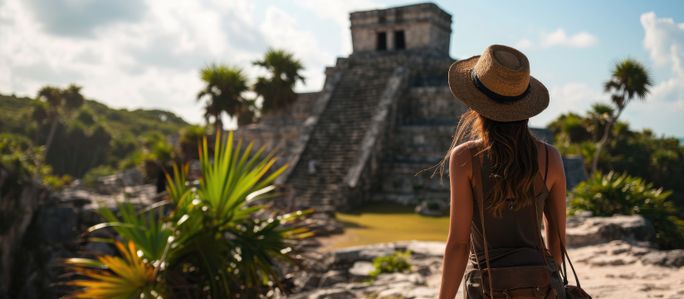
Pre Columbian Mayan walled city of Tulum, Quintana Roo. (Photo Credit: Adobe Stock)
A ‘pyramid dupe’ in Mexico
One of the more interesting examples right now is in southern Quintana Roo.
Ichkabal, which opened to visitors in 2024, is quietly positioning itself as an alternative to more famous (and far more crowded) archaeological sites.
The site dates back to around 400 B.C., with massive structures rising above a jungle canopy, including one that stands more than 150 feet tall.
RELATED: Gen Z Doesn’t Trust AI to Plan Their Trips
For travellers drawn to the scale and history of the Pyramids of Giza, it offers a similar sense of awe.
It’s happening everywhere.
Instead of Europe’s busiest cities, travellers are skipping hotspots for places with the same charm and less chaos.
What it means for advisors
The dupe trend allows for creative itinerary planning. It also creates space to introduce lesser-known destinations that may offer stronger margins.
At the same time, it requires a shift in how trips are sold. The value isn’t just in the price; it’s in positioning the alternative as an equal, or even a better, experience.
They open up new inventory, better availability and, in many cases, a stronger overall client experience.
But they also require confidence. It's not as simple as suggesting an alternative; it's reframing what “better” looks like.
Topics From This Article to Explore


