Sargassum seaweed has been a plague on Caribbean, Mexican and southern U.S. beaches for years, with scientists tracking massive accumulations since 2011. But this year's crop could be the largest on record.
CNN is reporting that a gargantuan mass of seaweed that formed in the Atlantic Ocean is headed for the shores of Florida and other coastlines throughout the Gulf of Mexico. The mass spans more than 5,000 miles from the coast of Africa to the Gulf of Mexico.
Dr. Brian Lapointe, a researcher at Florida Atlantic University's Harbor Branch Oceanographic Institute, told CNN that the 'blob' is currently pushing west and will pass through the Caribbean and into the Gulf of Mexico during the summer, with the seaweed expected to become prevalent on beaches in Florida around July.
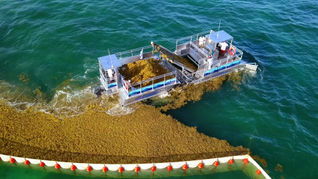 PHOTO: Vidanta Riviera Maya has a sargassum removal project. (photo via Grupo Vidanta)
The scientist said this year's sargassum bloom formed early and doubled in size between December and January, becoming the largest it has been since "this new region of sargassum growth began in 2011."
"This is an entirely new oceanographic phenomenon that is creating such a problem - really a catastrophic problem - for tourism in the Caribbean region where it piles up on beaches up to 5 or 6 feet deep," Lapointe added.
Researchers are working to develop ways to thwart sargassum's impact on beaches, possibly by sinking the seaweed to the bottom of the ocean or harvesting it for use in commercial products such as soap.
Topics From This Article to Explore


