
by Mia Taylor
Last updated: 7:00 AM ET, Wed August 12, 2026
Geopolitical volatility and uncertainty have become an all-too-common part of daily life.
The world is experiencing more active wars than at any point since World War II, according to the International Rescue Committee (IRC). Perhaps the most high-profile global conflict this year has been the U.S. - Israel attack on Iran, but it’s hardly the only such example of the violence and disruption impacting people and locations around the world.
One in seven people globally are living with the threat of armed conflict, according to IRC.
That reality, in turn, is impacting and reshaping global travel patterns, altering airline economics, and testing the resilience of tourism markets, according to a report from the consulting firm McKinsey & Company.
People still want to see the world, even when geopolitical tensions are creating an especially fraught landscape. But consumers are taking a different approach to the travel process from start to finish, including rethinking destination choices, being more thoughtful about how they get to where they’re going and exhibiting equal caution about when they will visit.
“The defining travel behavior of 2026 has not been widespread cancellation, it’s been rapid substitution,” Michael McCormick, founder and managing partner of Travel Again Advisory, told TravelPulse. “People still want to travel, but they’re more willing than ever to change the destination, airline, routing or timing when geopolitical conditions become uncertain.”
Translation: Travel demand remains firmly intact. And travel uncertainty is instead showing up via delayed bookings, altered travel patterns, and changes in channel choices, per McKinsey & Company.
What does that look like and mean exactly? We asked experts to break it all down for TravelPulse, explaining how geopolitics are impacting and reshaping travel in 2026.
Evolving consumer behavior
At a time when wars are more widespread, more persistent and deadlier than in recent decades, travelers have grown far more risk-aware, but not necessarily more risk-averse, said McCormick.
“They’re booking with greater attention to cancellation terms, travel insurance, nonstop flights, border requirements and the financial stability of the companies involved in their trips,” McCormick explained.
In addition, many travelers are waiting longer before committing to a trip as they watch global events carefully. Other travelers, meanwhile, are booking trips earlier, but are purchasing more flexibility to protect themselves from any unexpected disruptions that may arise.
And those aren’t the only changes in consumer behavior.
“The most noticeable shift is that travelers are evaluating the entire journey, not merely the destination,” continued McCormick.
“They're asking where the aircraft will fly, where they will connect, whether borders or visa requirements could change, and how easily they could return home if conditions deteriorate,” he continued. “That represents a meaningful change from the traditional question of simply, ‘Is the hotel or destination safe?’”
Indeed, travelers are paying close attention to all of the potential friction points along their journey, with an eye toward managing areas where risk and disruption could potentially arise.
That effort has included avoiding separate tickets, tight layovers, and visiting places that are only served by a handful of flights each week, said Andres Serra, chief of operations for Optimise Travel, a company that helps individuals travel smarter by offering practical planning tools, destination guides and current advice.
“Many people are willing to pay 10% to 20% more for direct flights, flexible fares, or refundable hotels because they prefer to protect their trip instead of saving a little money upfront,” said Serra.
George Morgan-Grenville, founder and CEO of Red Savannah, a global luxury travel provider, offers a similar assessment of shifting behaviors. He told TravelPulse that the changes taking place amongst travelers are more about how people are traveling, rather than whether they will travel at all.
“Adaptability has been the key trend, despite geopolitical tensions and higher fuel prices, people continue to show a strong desire to travel, and healthy spending has continued,” Morgan-Grenville said.
The biggest shifts in behavior Morgan-Grenville has witnessed have been towards predictability, certainty, and value.
“Travelers are seeking a stable experience, which has meant avoiding the Middle East either as a destination, or as a flight layover to Asia, for example,” Morgan-Grenville continued.
“Delayed decision making has also been observed. The proportion of enquiries received within 60 days of travel have increased from 10% last year to 15% this year,” Morgan-Grenville added.
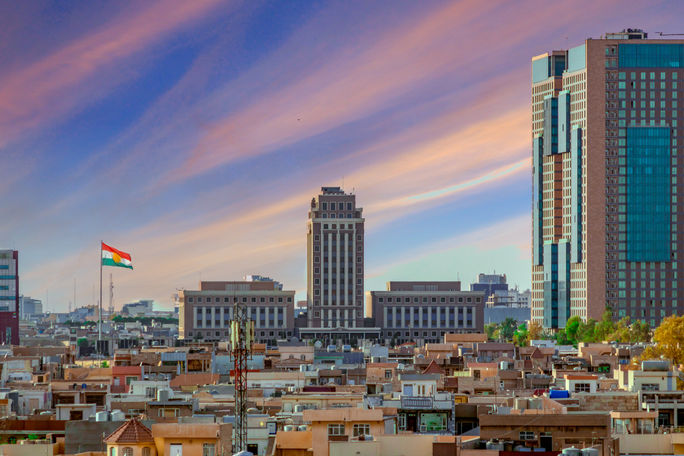
Erbil, Iraq. (Photo Credit: Ali Albahri/Adobe)
Destinations travelers are avoiding
When it comes to travelers and travel demand, regional conflicts affect far more than just the country where the issue is occurring. Wars also have an impact on neighboring destinations, airline routes, flight connection hubs, fuel prices and traveler perceptions across an entire region, McCormick explained.
“The continuing instability in the Middle East is the clearest example,” explained McCormick. “Even destinations that remain open and operational can experience booking softness because travelers do not always distinguish between direct danger, possible escalation and the risk of airspace closures or flight disruption."
Travelers are most clearly avoiding active conflict zones and countries subject to the highest government travel advisories, including Iran, Iraq, Lebanon, Syria, Ukraine, Russia and some destinations in parts of Africa.
But McCormick says the more interesting impact is the caution travelers are exhibiting even with regard to surrounding destinations or travel connection points that are simply located near areas of instability.
“Some travelers are reconsidering trips involving Middle Eastern airline hubs or itineraries that could be affected by sudden airspace restrictions even when those destinations themselves remain relatively secure,” McCormick explained.
The result has been many popular destinations in the region, such as Oman and Jordan, “becoming victims of proximity-based perception risk,” said Morgan-Grenville.
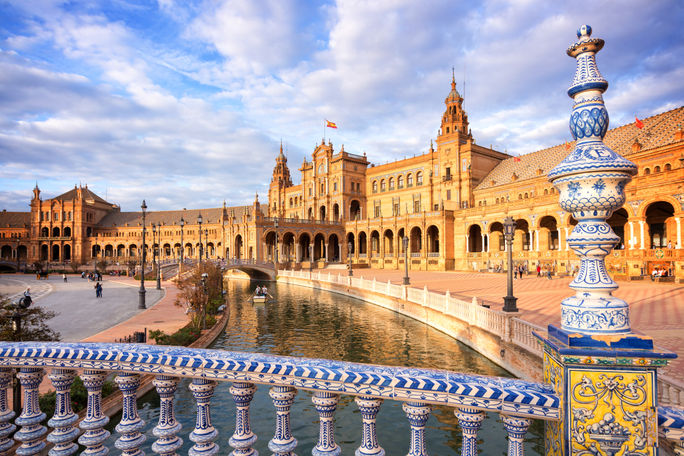
Plaza de Espana in Spain. (Photo Credit: Delphotostock / Adobe Stock)
Destinations growing in popularity
As once popular Middle Eastern locations like Dubai and Abu Dhabi (which are historically popular winter and shoulder season destinations) experience a dramatic decline, countries like Spain, Greece, Portugal, Turkey, Italy and Morocco have emerged as the go-to alternatives for travelers seeking stable, sunny options free from conflict.
Other ‘safe havens’ have also emerged, says Morgan-Grenville, like Iceland, New Zealand and Japan, as well as northern and western European destinations such as Finland, Scotland and Ireland. Red Savannah’s bookings for Latin America are also up some 45%, while Africa is up 48%.
Some island destinations are benefiting as well amid the geopolitical uncertainty influencing traveler behavior. Destinations like Mauritius and the Maldives are now widely seen as peaceful retreats.
“Travelers are gravitating toward places that feel politically stable, easily accessible and operationally predictable,” said McCormick.
This new reality also benefits domestic U.S. travel and Canada, along with the Caribbean and destinations that can be reached nonstop without complicated connections, McCormick says.
(Photo Credit: Courtesy AdobeStock)
Winners and losers amid the 'new normal'
The geopolitical instability that’s dominated 2026 has indeed created a new normal.
As the McKinsey & Company report explains, finding flights has become more difficult for consumers as airlines across the globe maintain reduced schedules in response to higher fuel costs.
At the same time, making flight connections through Middle Eastern air hubs is not as easy, or even as popular, as it once was. Following the U.S.-Israel attack on Iran, the total number of international passengers connecting via Middle Eastern hubs fell by 5.1 million (about a 53% decrease) year over year as of March and April.
Most Gulf region markets are experiencing significant declines in accommodation revenue, as well. Dubai has seen the largest effect, with a 75% year-over-year drop in room revenue—equating to a $1.8 billion decrease, according to McKinsey & Company.
Many travelers are opting to stay closer to home, according to a recent survey related to geopolitical events conducted by travel insurance marketplace Squaremouth. Just over 10% of survey respondents said they actively chose travel destinations that were closer to home this year. And nearly one in four travelers scaled back a planned trip this year, while almost 9% of survey respondents said they purchased more travel insurance coverage than usual.
Still, the consumer appetite for travel remains resilient. People are still willing to invest their hard-earned money even in an increasingly uncertain world.
"My overall view is that geopolitical instability is not eliminating travel demand. It is redistributing it,” said McCormick. “In 2026, destinations that can communicate stability, accessibility and preparedness are gaining share from destinations that create even the perception of uncertainty.”
“The broader winner is not one particular country. It’s the destination that offers the traveler the fewest perceived points of failure,” said McCormick.
Topics From This Article to Explore


